


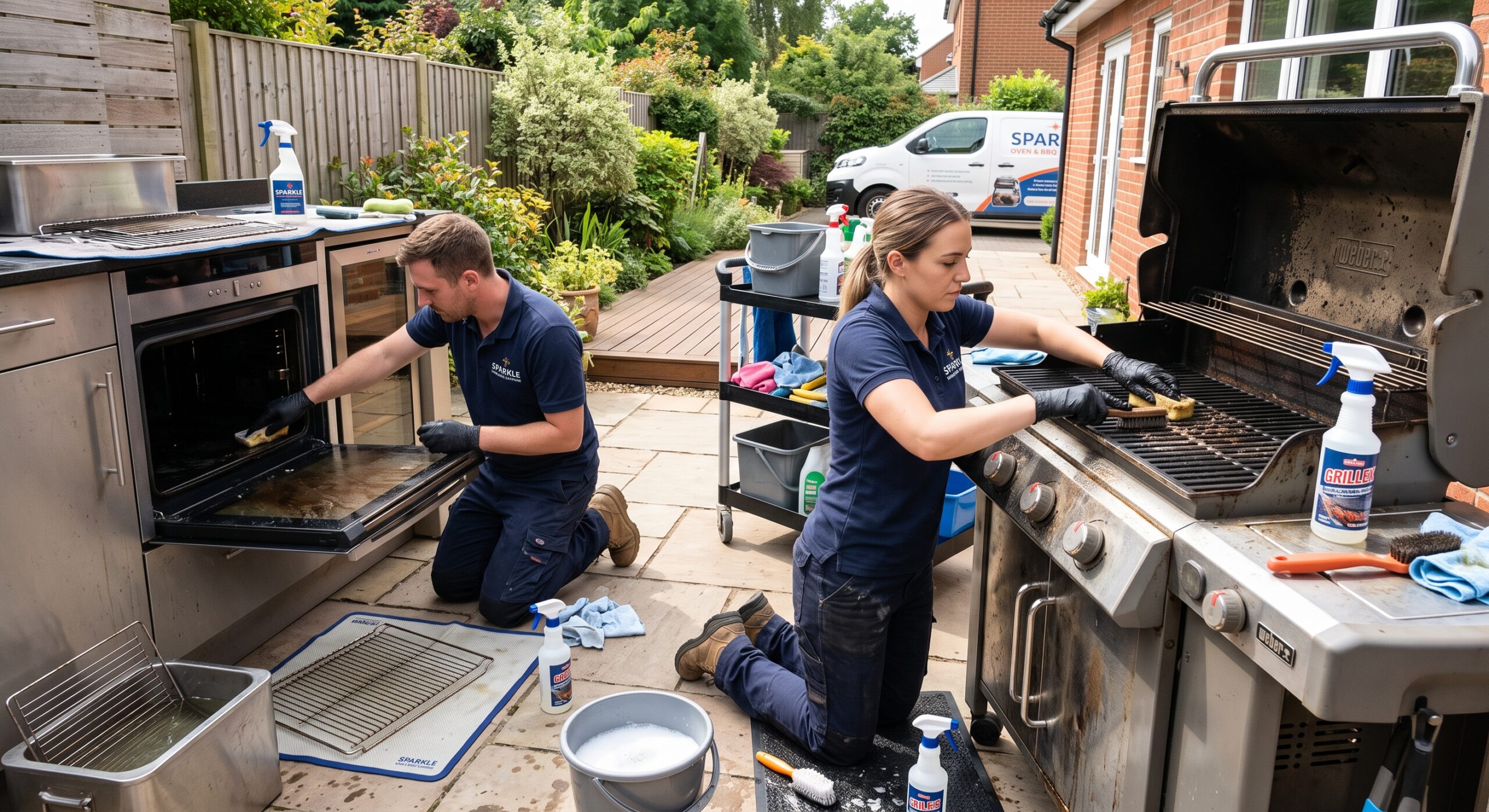
Oven and BBQ Cleaning: 10 Secrets for a Spotless Shine
However many great meals you have cooked on your BBQ or in your oven after a while they can be left caked with stubborn grease and food residue, a task dreaded by most people. oven and BBQ cleaning can be a very laborious job, taking up a lot of time and leaving your hands very greasy and smelly.
Carbon from food can leave nasty deposits in your appliances, affect the taste of your food, decrease the life of your expensive appliances and cause silent fires. No more hours of scrubbing, no more grease stains, no more dull grime! Learn how to make your kitchen and barbeque area shine like new with our 10 secrets of professional cleaning, to be revealed in this comprehensive guide.
Dedicated home cook or weekend grill master – this ultimate guide will teach you everything you need to know about your oven and BBQ cleaning. We will not only discuss the many health benefits of using clean cookers but also offer practical cleaning advice, eco-friendly DIY ideas for oven and BBQ cleaning as well as some ingenious ways to maintain your appliances to ensure that they will last longer. And lastly we will let you know when it is time to let us do the scrubbing for you at Gifted Hands Cleaning. Time to get started!
Why Regular oven and BBQ Cleaning is Non-Negotiable
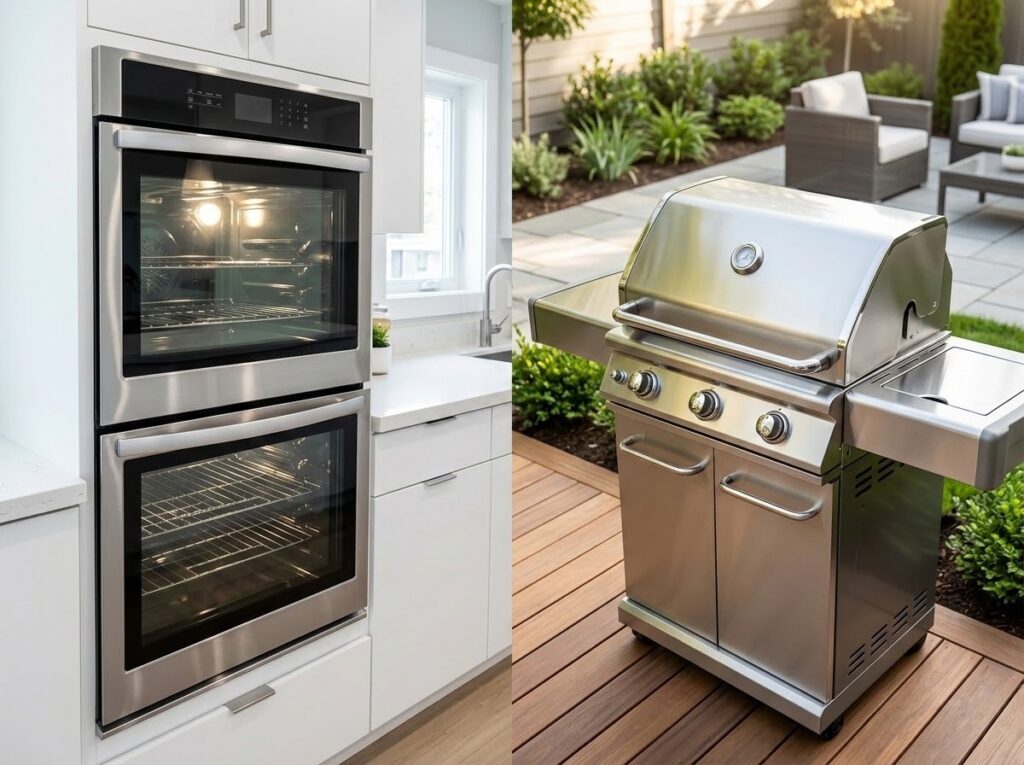
It is human nature to try to avoid a messy situation and to ‘put it out of your mind’ by shutting the door on a dirty oven or pulling the cover on a BBQ that has been used for a big feast and the inevitable splatters and spills have made a real mess. However, the residue from food that has been left to cook on the surface of your oven or BBQ will not just sit there waiting to be wiped clean.
It will harden over time, forming layers of fat, oil and even the many different types of marinades that are used on food before it is cooked. It is these carbon deposits that will cause the most damage to your home if they are not removed on a regular basis.
Health Risks: Carcinogens and Harmful Smoke
Every time you use your oven or barbecue old greasy fat from previous meals are heated up and burn, producing most unpleasant smoke.That’s bad enough on its own but also worse when you consider that the fat of animal origin in particular is known to produce Polycyclic Aromatic Hydrocarbons (PAHs) and Heterocyclic Amines (HCAs) when it is burnt.
These two groups of chemicals are known carcinogens and are formed particularly when there is poor ventilation, as is the case with ovens. As a result, even moderate use of an uncleaned oven can expose the user to high levels of carcinogens.The smoke from burning fat is highly irritative to eyes, throat and lungs. It can cause problems for people suffering from respiratory disease.
The older the grease the more chance there is of Polycyclic Aromatic Hydrocarbons (PAHs) and Heterocyclic Amines (HCAs) being released into the air when it is heated. These nasty substances are known to cause serious health problems and are also carcinogenic. In the kitchen these can be worse than others in a poorly ventilated room as they can irritate the eyes, throat and lungs. In order to prevent these toxic fumes from entering the air when cooking, all cooking surfaces must be clean.
The Silent Fire Hazard
The greatest risk of an appliance that has been neglected is a grease fire. Grease from animal fats and from cooking oils is very flammable and can easily start a fire when heated. Grease in an oven can easily catch fire at roasting temperatures, when it accumulates on the bottom of the oven, around heating elements or in cracks & crevices.
A BBQ also poses a great risk of fire, especially fat that has dripped from a steak onto a greasy burner or into an over flowed drip tray. This fat can easily catch fire and spread quickly. A large fire in a short amount of time can easily get out of control, and can spread to other parts of your home and yard. To avoid all of these risks, grease must be removed from appliances on a regular basis.
BBQ’s are notorious for grease fire’s with many happening due to excessive fat from a beautiful steak dripping onto greasy burners. Likewise, overflowed grease from drip trays can cause unbelievable fires that can quickly travel to other areas of your home putting you and your loved ones in grave danger. By regularly deep cleaning your BBQ appliances you’ll be confident to host any number of outdoor gatherings and BBQ’s without the constant fear of being engulfed in a horrific grease fire.
Ruining the Flavour of Your Food
You laced that beautifully prepared dessert with the perfect amount of garlic from last week’s roasted chicken. Or worse, you’re cooking up a premium cut of beef on the barbie, and as it cooks up, it begins to taste of bitter, burnt flavors, a flavor that is characteristic of ash. This happens when the old, burnt grease acts like a sponge to absorb all of the great smells in your kitchen, transferring them to whatever you are about to eat.
The worst part is when the old fat heats up and smokes, releasing the dense, acrid smoke into the air that carries with it the bitter, carbonized particles that will transfer to your food. These particles are of the worst kinds of flavors that we can taste, and once your food has come into contact with them, there is no getting the flavor back.
Dirty grease in your ovens and BBQ cleaning acts much like a sponge and draws into it all sorts of other smells. Then when you do use the equipment all the smells of old greasy food are released into the air and then transferred to whatever food you are then cooking. This often gives the worst of bitter, ashy flavors to what would otherwise have been great dishes.
It’s especially bad when cooking at high temperatures and the old fat can smoke alarm triggering and fill your kitchen or outside area with terrible smells. Oven and BBQ cleaning after each use you can stop smells and tastes of past foods entering into future foods, giving you peace of mind that all your food will taste exactly how you intended.
Shortening Appliance Lifespan
High-quality ovens and BBQs are investment pieces that will cost you a pretty penny. Let them get caked in grease and muck, and they’ll soon meet an untimely demise, only to be replaced by a far more expensive model.
Appliances that are covered in grime become less efficient the older they get. When there is lots of buildup on heating elements and around temperature sensors, it can cause problems for the appliances. In many cases, dirty appliances are not able to read the correct temperature and this means that the appliance must work even harder in order to reach the correct temperature for cooking.
As the appliance works even harder in order to reach the correct temperature, it can place a lot of additional stress on the appliance. A soiled appliance can suffer serious damage, for example the heating element blowing. All appliances will be affected in life if not regularly and cleaned properly in order to maintain efficient operation for years to come.
Step-by-Step Oven Cleaning Like a Professional
Professional cleaners do not rely on just scrubbing away; they use specific methods and products to break down the carbon in food and grime to give a deep commercial clean. Here’s how you can achieve a similar standard of cleanliness for your oven using safe products and methods.
Understanding Your Oven Type
All surfaces must be treated differently and prior to using any cleaning agent, it is crucial to know the model and type of oven you have – i.e. standard electric, gas or modern fan-forced (convection) oven.
Whether your oven is Pyrolytic or not, it’s also good to note that running the self cleaning function on extremely soiled ovens can produce an enormous amount of black toxic smoke that may trigger smoke alarms and aggravate poor air quality. In addition, there are chances that the extreme heat could melt and destroy internal electronic control boards which can be very costly to repair. Hence for extremely greasy pyrolytic ovens it’s better to manually clean it up rather than risking it causing a hazard.
Secret #1: The Prep and Rack Removal
The biggest mistake that people make when it comes to giving their oven a proper cleaning is to be trying to do it with the racks still inside. You have to give the interior of your oven a thorough cleaning with an empty cavity. Make sure the oven is completely switched off and has cooled down, and then remove all of the wire racks and any baking trays and take out the side shelf supports (if they are detachable).
Always begin by removing all of the racks and then give them a good clean in your laundry sink or your bath filled with hot soapy water, covering the base of the sink or bath with an old towel to protect the surface from scratches from the sharp edges of the stainless steel or chrome. Remove as much of the grime as possible and then soak the racks for at least two to four hours or even overnight in the hot soapy water to allow the grime to dissolve. If there are any areas of burnt-on grime, add a scoop of laundry detergent, such as Napisan, to the hot soapy water and it will dissolve the grime.
Secret #2: The Ultimate DIY Bicarb Soda Paste
Most oven cleaners are full of harsh, toxic chemicals. Make this simple eco-friendly oven cleaner instead – it’s powerful and effective at removing the toughest grease and grime, and is totally safe to use and to store.
For the main cleaning of the oven, I make a paste with half a cup of bicarb soda and enough water to form a thick pancake batter like mix. I wear rubber gloves for this bit and cover all surfaces completely, including the bottom, sides and top of the oven. I leave it on for at least 12 hours before rubbing off with cold water and a cloth to reveal all of the carbonized bits to be scrubbed off with a wee bit of elbow grease. After applying the paste, allow it to work for at least 12 hours to penetrate and lift the toughest carbon deposits and food residue. Scrape off with damp cloth.
Secret #3: Conquering the Heating Elements
When applying your cleaning paste it is wise to take care when it comes to your oven’s heating elements. The exposed bottom bake element and the top grill (broiler) element both require special care when cleaning. Certain cleaning products and solutions can easily damage the delicate casing of these components.
This can result in them sparkling or shorting when next in use. It is best to wipe any paste that may have come into contact with elements with a damp, soft cloth or sponge. For more stubborn areas you can use a scouring pad or a wire brush but be extremely cautious not to scratch the surface of the elements.
Most oven cleaning products are highly flammable and can easily damage the metal casing of these elements causing them to spark or even short circuit when you next use your oven. Be very careful to avoid any paste entering the metal housing of these elements.If some should accidentally be left on the surfaces of these elements, immediately wipe them off with a damp soft cloth. Never use abrasive scouring powder or steel wool on these elements.
Secret #4: Restoring the Oven Glass Door
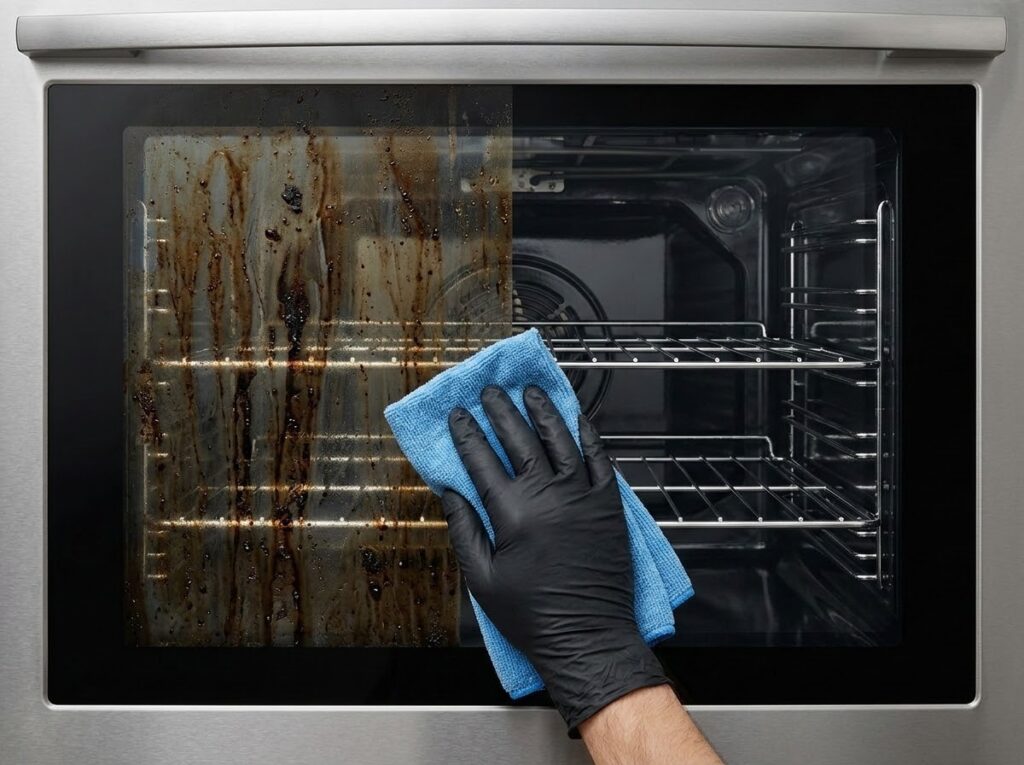
Dark brown grease and food residue streaks on glass oven doors are very hard to remove, making a mess of what would be a very neat and clean oven. First of all remove any large amount of grime with a damp microfiber cloth. This will make the cleaning of the rest of the oven so much easier and then you can go back to the door.
Next, spread some paste all over the glass surface of your oven door using an almost dry sponge. Press down hard on the paste to spread out evenly across the whole surface. 30 minutes later, use a plastic scraper on hard surfaced pans and wash as normal with hot soapy water and a non scratch dish sponge on smooth surfaced pots and pans.Be very gentle when scrubbing as you don’t want to scratch your tempered glass.
For the glass, after you have cleared off as much of the big gunky stuff as possible with a damp microfiber, cover the surface with thick paste of bicarb and water and allow to penetrate for 30 minutes. Using a piece of plastic (a plastic pan scraper for instance), or a non scratch dish sponge, gently rub in all directions to lift off the dark gunky lines.
For any remaining marks, mix up a spray bottle with equal parts of water and white vinegar, spray onto the glass and the vinegar will react with the bicarb that is still on the glass, creating little bubbles of fizz that lift off the final microscopic amount of grease. Wipe with a clean dry microfiber to a brilliant streak free finish.
Tackling the Range Hood and Stovetop
Clean and restore the Range Hood and Stovetop while the Oven is doing its ‘soaking’ stage of cleaning. Simply remove your Range Hood’s mesh filters and put them in the bathtub with your oven racks to soak in hot water with some degreaser, while spray and wipe down your stovetop to have it look new and ready for use like new again.
Restoring Your BBQ Grill for the Perfect Aussie Barbie
Backyard BBQs are deeply ingrained in Australian culture and for good reason – there’s nothing quite like throwing a few premium steaks on the barbie or slowly cooking a brisket over low heat while entertaining your friends and family in the backyard. However, no matter how you choose to use your BBQ, leaving burnt marinades and hardened fat to pile up on your grills can quickly ruin a great meal and also attract some unwanted patio pests. This article will detail a simple step by step guide to keep your grills looking and performing their best.
Tailoring the Clean to the Grill Type
Just like the many different varieties of ovens that you use to cook in the kitchen there are also many different varieties of BBQs and outdoor cooking appliances that are used in backyards all around Australia. As a result of this fact it must be recognized that one of the blue prints or strategies for cleaning a BBQ will need to be based on the particular type that you are using.
Gas BBQs: Clean the burners on Gas BBQs to ensure even flow of gas. Ensure the gas bottle is completely disconnected from BBQ prior to cleaning.
Charcoal Webers/Grills. Ash is a big problem because it draws in moisture and becomes a corrosive paste that will rapidly rust out the base of the Weber if left to pile up.
Pellet Smokers: – These grills are made up of a multitude of fragile parts. Minimal amounts of water can cause damage to temperature probes and other internal components. Therefore, clean as much as possible with a dry scraper, and use a shop vac to remove as much wood dust as possible from the grill and surrounding work areas.
Secret #5: The Burn-Off Method
Let the Burn-Off Method do the work for you – it’s the trick that Pit Masters use! Open up the hood of your gas BBQ and turn up all the burners to high. Let them burn for 15 minutes to allow the heat to scorch any stuck food. Once this has been done, allow the BBQ to cool until it is warm. Use a hard scraper to remove all the carbonized bits – they will come off easily and leave your grates as good as new!
This method is effective as the heat from the BBQ will burn any excess residue from previous meals, turning them to dry, white ash which can be easily removed with a stainless steel BBQ scraper. Note: The BBQ must be completely turned off and the gas bottle disconnected prior to starting this process.
Secret #6: Deep Cleaning Grates and Burners
In removing the grates and flat plates, you are going to uncover parts of your BBQ that have been unknown to you until now.These grates can be soaked in a large tub of hot soapy water to remove all of the grease and grime from cooking. Cast iron grates however can rust very easily so be careful not to submerge them for too long, 30 minutes is the maximum to avoid any damage.
For removing old food from grates use hot soapy water and a good heavy-duty dish soap, Dawn is good for grease. Cast-iron grates rust very easily, so avoid submerging for long.30 minutes should be max.. Do not let them soak for longer than 30 minutes as this can cause severe rust.
Once you have removed the cooking surfaces and are washing the heavy plates, open up the cavity of the BBQ to the dish soap. Remove the flame tamers (the metal tents that sit above the burners). Using a stiff wire brush or even a toothpick, clear all the small gas portholes along the length of the burner tubes. Clogged portholes result in poor heating distribution and can also cause large flare-ups.
Secret #7: Grease Tray and Catch Pan Rescue
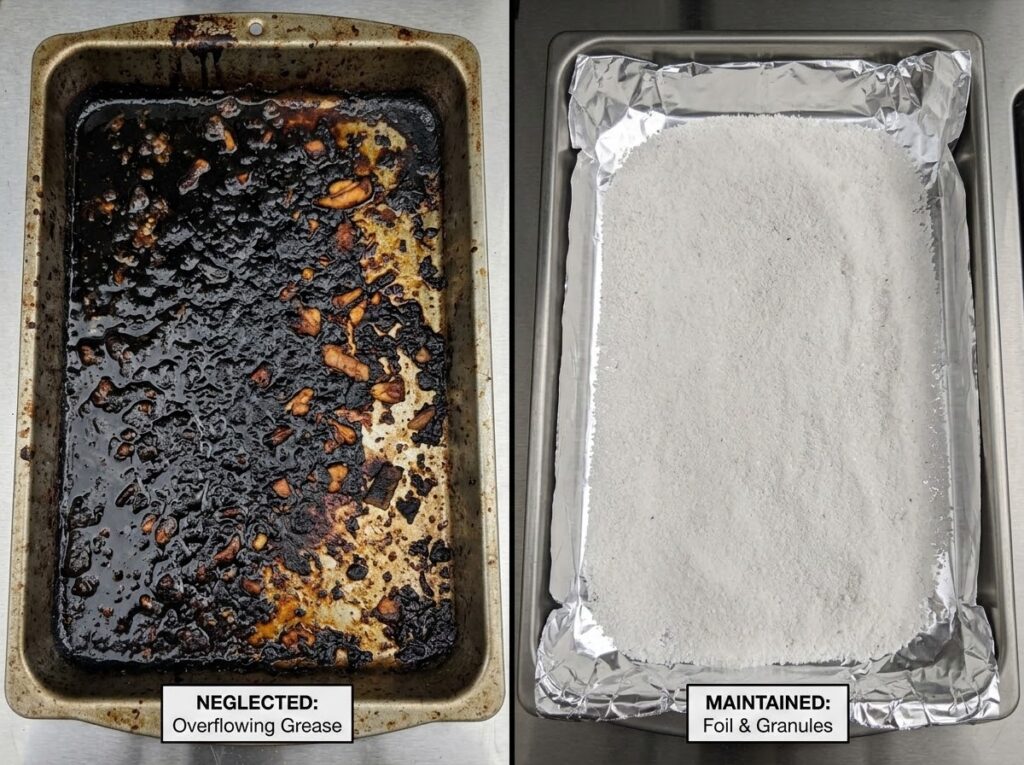
This is probably the most despised and often ignored part of any outdoor BBQ. The drip tray (or grease tray) is found underneath the burners of your BBQ and is designed to hold the grease that is rendered from your BBQ’d foods. This can quickly become a serious fire hazard if left to overflow, and also becomes a feast for mice, rats and insects alike.
Remove the grease from the tray and either throw it in the bin or transfer to an old container for storage. Don’t, under any circumstances, wash heavy BBQ grease down your kitchen sink, as it will solidify and can cause serious damage to your plumbing.
Pro-Tip: After you have given the grill’s drip tray a good clean with hot soapy water, line the bottom of the tray with foil and sprinkle in fat-absorbing material such as ‘Fat-Sorb’ or even non-paper-based kitty litter. Then the grease will be absorbed by the material as it falls from your grill, enabling an easy disposal when required by simply throwing the foil away and putting a reline with new foil & litter.
Secret #8: Exterior Polishing
Protecting your BBQ’s exterior from the elements in addition to creating something to admire is critical. With stainless steel BBQ’s, we recommend washing them from time to time with warm soapy water to get rid of dirt, dust and especially salt in the air from time to time, particularly down here in South Australia on the coast.
It’s also great practice to make sure that you dry stainless steel with a great quality, lint free microfiber cloth to stop any kind of tea staining (as mentioned above) and subsequently any rust from occurring. To maintain a brilliant shine and really protect the finish, rub down with a specialized stainless steel polish, always in the direction of the metal’s grain and never circular.
To prevent tea-staining simply dry the exterior with a microfiber cloth after washing. To give it a brilliant finish apply a Stainless Steel Polish, always applying in the direction of the metal’s grain and not circularly.
- Seasoning the Grill
The final step to get your BBQ ready for cooking is to season the Grill (hotplates and grates). Cast iron and steel plates are prone to rust so you need to coat them in a protective layer of cooking oil to prevent this from happening.
Regardless of the BBQ construction, all grates, hotplates and surface areas are susceptible to developing rust. You can protect them with a good quality cooking oil that has a high smoke point. Most canola and rice bran oils work a treat and can be sprayed or rubbed onto the grates in an even coating.
By placing the BBQ on the lowest setting and allowing the oil to bake into the metal for approximately 15 minutes you’ll find the grates are now completely protected and ready for next use. The oil will never run off the grates and provide an exceptional non-stick surface while ensuring that the grates are protected from any rust.
- Choosing Your Weapons: Natural vs. Chemical Cleaners
When it comes to tackling tough oven grime and BBQ grease, there are really two options – using natural DIY cleaners, or opting for industrial-strength chemical cleaners. The solution to tackling tough grime in your kitchen comes down to the severity of the grime and your household preferences between natural and chemical based cleaners.
The Power of Green Cleaning
A cleaner for your BBQ or Ovens that is eco-friendly can be used for normal cleaning. There are plenty of household products that can be used for great cleaning results. Such as bicarb soda, white vinegar and lemon juice. Non-toxic, pet friendly and no harsh chemicals to transfer to your food. A great alternative for houses that smell and have very sensitive noses.
However, it will take a lot longer to remove stuck carbon than with harsh chemicals. It is ideal for the everyday cleaning of your appliances and for houses with lots of pets and children where there is a risk of exposure to harsh chemicals. It is not toxic or bad for the environment and it won’t leave any foul smells or residue on surfaces. If you do choose to use green cleaning products, be prepared to use a lot of time and elbow grease to remove stuck on carbon.
- When to Bring in the Heavy-Duty Cleaners
Commercial caustic cleaners can be a good alternative to the long, hard work of greasy and stubborn cleaning with natural products. These contain very strong cleaning agents, which dissolve grease and carbon very fast. Please be aware that strong cleaning agents like sodium hydroxide emit very toxic fumes and can cause serious chemical burns to skin and eyes. When to use them is explained below.
- Make no mistake: the cleaning products that we refer to as ‘industrial’ or ‘commercial’ contain products that can cause very serious harm indeed. There are fumes emitted by these cleaning products that are potentially toxic to humans. There is the risk of serious chemical burns to skin and eyes.
You would wear rubber gloves, safety glasses and long sleeves when doing a clean with such strong cleaning agents. I would avoid using any caustic cleaning agents as these will instantly cause corrosion to any aluminum parts within your BBQ as most of them are made of aluminum. The corrosion will be permanent in nature.
Should You Do It Yourself or Hire the Experts?
You’ve got the know-how to give your appliances a deep clean, but will you really want to put in the time and effort to give them a showroom shine?
The Time, Effort, and Mess Factor
Deep cleaning an oven or BBQ is generally a huge task that can end up consuming an entire weekend, or even longer if you are tackling other parts of the house as well. As it is a huge messy job, and physically demanding it’s not something that most people would wish to spend their precious free time doing. Having to clean around greasy components, having to throw away used sponges, and getting sore arms from repetitive scrubbing are just a few of the many reasons that people wouldn’t wish to undertake the task of deep cleaning an oven or BBQ.
Secret #9: The Professional Advantage
When professionals do clean ovens and BBQs they use totally different methods and tools to those used by homeowners. Firstly, there is the huge variety of special cleaning products available to professionals which are much more effective at removing stubborn grease and food residue than any products found in supermarkets. Then there are the tools – big scrubbers, long handled brushes, powerful pressure cleaners etc. However, the biggest difference of all is the equipment known as heated dip tanks.
Firstly, heated dip tanks that are used for deep cleaning ovens are large cumbersome contraptions and are generally carted around in a van. These tanks are filled with a non-toxic solution and heated to very high temperatures to enable the solution to melt carbon deposits (such as burnt on food) left in the oven.
Once heated to the correct temperature, the solution is left to soak all items removed from the oven, including all racks and trays, as well as the fan and any glass components. While all items are soaking in the solution, the technician will deep clean the inside of the oven shell, paying particular attention to cleaning all crevices to remove any grease deposits. Once everything has been cleaned, all items are washed and rinsed in the tank, and left to dry before being returned to your oven.
Why Gifted Hands Cleaning is Your Top Choice
We offer cleaning services to households based in Adelaide and surrounding suburbs. We take all of the hard work out of cleaning your home so that it can have that showroom finish that you wish for on a day to day basis.
As a trusted, locally-based South Australian cleaning company, Gifted Hands Cleaning Service provides the best South Australian cleaning service with a personal touch and attention to detail. Whether it is deep cleaning a house of contents for a move, preparing for 100% Bond-Back guaranteed End of Lease cleaning, or incorporating professional oven cleaning into regular domestic cleaning, Gifted Hands provides professional results for an affordable price. Our fully insured, police-checked cleaning technicians are equipped with premium, hospital-grade, eco-friendly cleaning products, and the latest HEPA filtration equipment.
At Gifted Hands Cleaning Services, we have a team of fully insured, police-checked cleaners that will visit your home with all of the cleaning products and equipment needed to complete your task, including HEPA filtered vacuum cleaners and hospital-grade eco-friendly cleaning products. Our aim is to leave you with time to pursue other interests whilst we complete all the household cleaning required. No more scrubbing at burnt grease for you!
Secret #10: Keeping Them Cleaner for Longer
Proper maintenance is also key. Once your appliances have been restored by you or the team at Gifted Hands, you can keep them looking their best. In this article we will explore some of the ways to keep your appliances in pristine condition.
Quick Post-Cook Wipe Downs
Preventing Grease Carbon Buildup: Quickly Wipe Down after Cooking! A soft, dry kitchen cloth and water spray are all you need to wipe down any oven or BBQ surface to prevent Grease Carbon Buildup and Cleaning. A spill while cooking can turn into a harder carbon cleaning task in hours if not quickly wiped clean with a soft cloth and water. Even a bit of Grease Carbon left behind can start to cake onto surfaces in your kitchen or outdoor BBQ area!
Utilising Preventative Measures
The clever cook will never allow splatters to become carbonized to begin with. They work smart, not hard. For roasting fattest of meats, use of a high-sided roasting tray or even of a roasting bag with a tie at both ends are cleverest of ideas for to contain all fatty splatters to tray or bag and thus to prevent hardest of carbonized grease marks from ever forming.
For instance baked pie or casserole which in the oven always is bubbly and thus has a potential to overflow; that never will happen if during baking said pie or casserole is placed on a bigger than normal baking tray and that tray is placed on rack below in the oven; any overflow will fall on tray below and never on floor of oven.
The Importance of BBQ Covers
Dust, pollen, bird droppings and even salt air can cause damage to the exterior of your BBQ. Invest in a good quality, heavy duty BBQ cover and use it every time you have finished cooking. It will soon become second nature and will save your BBQ from premature wear and tear.
Common Questions About Oven and BBQ Maintenance
How often should I deep clean my oven and BBQ? The average household could benefit from a deep clean every 3 to 6 months. Depending on your household, how much you bake, how often you roast and use your BBQ, you could need to deep clean every 2 to 3 months to keep your appliances in good working order and to prevent heavy buildup of grime and carbon.
Can I use a heavy duty oven cleaner for my BBQ? No. Heavy duty oven cleaners are extremely harsh and designed for the tough job of cleaning inside ovens. Ovens are usually lined with enamel, which can withstand harsh chemicals. Outdoor BBQs on the other hand are made from a variety of different materials, including aluminum, cast iron, and stainless steel. Most heavy duty cleaners are too harsh for these materials and will damage them by burning, corroding or discolouring. There are heavy duty degreasing cleaning products available, made for cleaning BBQs and grills that are safe to use. Otherwise a strong dish soap is best.
A dirty oven uses more electricity to clean and to cook because of the layer of grime and carbon. This carbon acts as an insulator. It stops the heat from the elements from traveling through the oven and getting to your food. It can also interfere with the oven’s thermostat and the sensors. As a result, the oven will have to work harder, use more electricity and run for longer in order to reach the desired temperature and to maintain that temperature for your cooking.
Enjoy Healthier, Tastier Meals Today
Having a clean oven and BBQ has more to offer than just having a clean kitchen or patio. A clean oven and BBQ enable you to eat healthier and tastier meals, protect your family from smoke and fumes, could save you and your family from a disaster, help you save money on energy and ensures that your kitchen appliances function properly and efficiently.
Baked on Grease can take over your Kitchen /BBQ and cost you loads of time and ruin lots of nice meals. Why let this happen when Gifted Hands Cleaning Services can clean and restore your appliances to look and perform like new. Have a Free Quote today.