

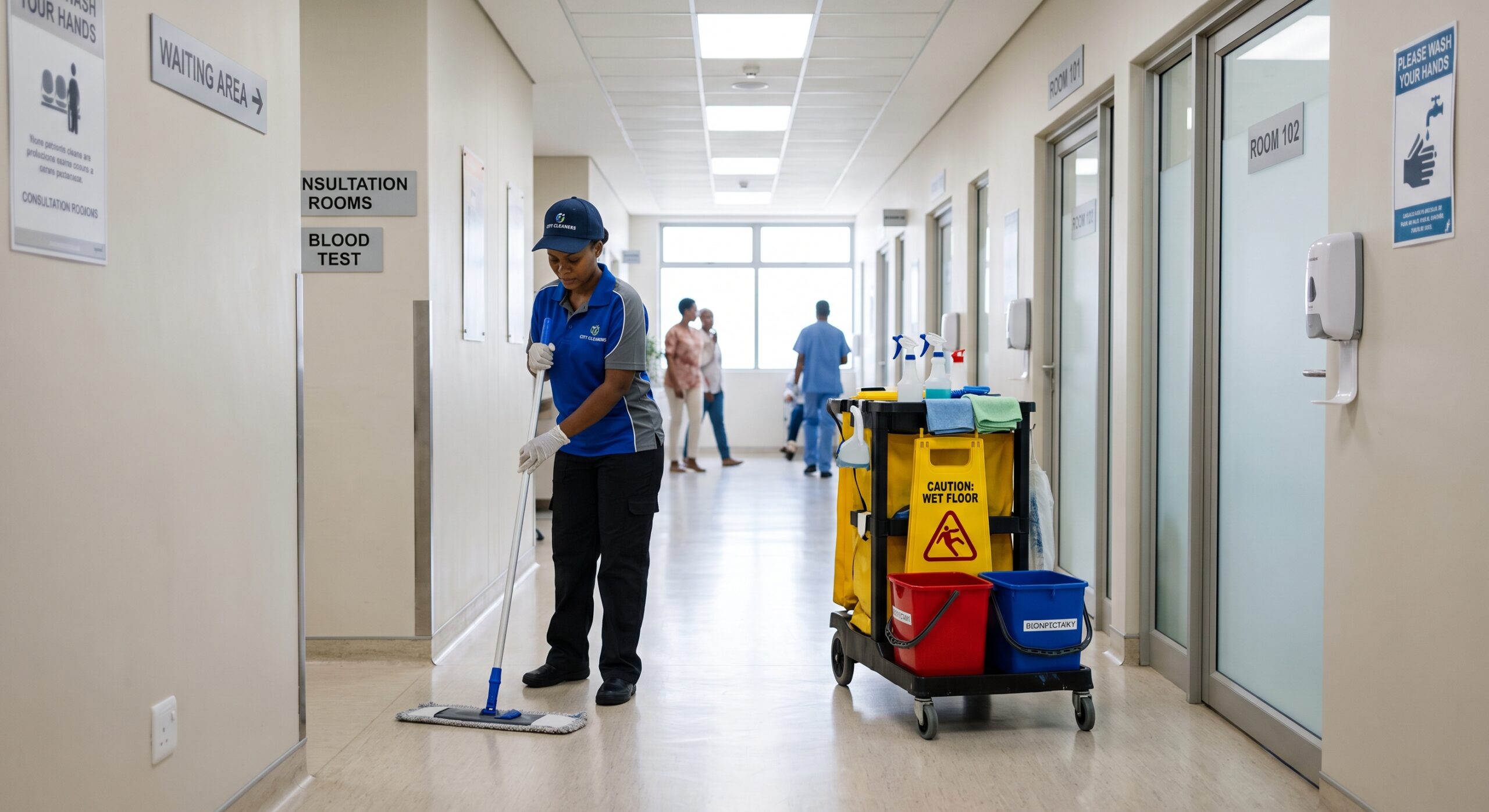
Medical Centre Cleaning Practices for Ultimate Patient Safety
They are tiny and usually invisible to the human eye, but they are very present and may even be right in front of you – hiding under the armrests of waiting room chairs, around the edges of the reception desk and in payment terminals. Like little landmines waiting to unleash harm upon unsuspecting patients these inanimate objects can be home to bacteria and viruses that are highly resistant to ordinary cleaning products, some of which are highly contagious and able to spread rapidly throughout a healthcare facility, placing patients in grave danger of Healthcare-Associated Infections (HAIs).
Keeping the medical centre cleaning oftenly is not just a matter of way to keep up appearances; it is a fundamental, life saving practice that is second to patient care and taken very seriously by patients and health care workers alike. Patients at medical centers are the most vulnerable in our society; often stressed, frightened and suffering from illness already.
A lot of trust is placed in the Medical center to be there for patients at their time of greatest need and to look after their best interests to safeguard against further harm or neglect. Patients’ arms are placed on the armrests of chairs and other structures in reception areas, used to insert money into payment kiosks, placed on surfaces to transfer items and left to transfer to trolley beds. Many viruses and germs are invisible and can transfer quickly. That is why the area where these items are placed must be a priority for hygiene practices.
In the majority of commercial businesses, hygiene and cleaning are maintained to provide a good impression to patients and maintain a good appearance. In a healthcare setting, this could not be more opposite. The patient is generally at their most vulnerable state and certainly in a very anxious state at this time. It is common that the patient will be in a weakened condition, whether this be due to illness or stress and will also be at their most defenseless at this time. If a patient were to contract an infection whilst at a healthcare facility, this would cause extreme distress. And would once again give a very poor impression to the patient in crisis.
Achieving the highest standards of medical centre cleaning requires more than just a quick clean of the floors and surfaces. The highest standards of patient safety can only be achieved by adopting a number of specialized practices and approaches that have been developed specifically for the health care industry. This guide explains the seven practices that you must adopt in order to provide the highest standards of patient safety and protection.
These include the use of color-coding, the adoption of the correct products, including the use of TGA-approved hospital-grade disinfectants, and a number of approaches to manage the air quality in your health care facility. In this guide, we discuss the reasons why each of these practices are critical to the highest standards of patient safety and health care facility cleaning, and we also explain how partnering with a specialized cleaning company, such as Gifted Hands Cleaning, can provide you with the ultimate peace of mind.
.
Why Medical Centre Cleaning is Vastly Different from Standard Commercial Cleaning
Most commercial cleaning companies are not equipped to service a medical center. While a typical office requires a general cleaning service to remove trash, vacuum carpets, and dust surfaces, a medical center is a completely different animal. It requires a specialized cleaning service, performed in a very specific manner, that focuses on the removal of all microbes from all surfaces and equipment. Such cleaning requires great care and the use of very specific cleaning products, products, and techniques, all performed to very strict guidelines in order to reduce the risk of exposure to any bodily fluid, and to destroy any bloodborne pathogen or airborne virus.
The High Stakes of Healthcare Environments
A Medical Centre cleaning is a unique, high risk environment which can contain large numbers of people such as sick people, vulnerable people and immunocompromised people. Patients from all areas of life including from Schools, Public Transport, Workplaces and Homes bring in pathogenes to these areas. Medical Centresiduals such as Bodily Fluids, Blood and Airborne Viruses pose a high risk to the health of patients and staff in these environments.
So when a Medical Centre cleaning requires cleaning between occupied times it is not just a case of moving the dirt from one place to another or making the place look clean. It is a matter of microscopic safety. Safely removing the high risk of residue, microscopic bugs that can be left behind and are difficult to destroy in a variety of situations. There are some situations where some bugs can be resistant to destruction. And a highly specialized approach is required. Which is not provided by a normal Commercial Cleaning Company.
Cleaning vs. Disinfecting vs. Sterilising: Understanding the Hierarchy
Understanding healthcare hygiene in practical terms is important to understand surface decontamination in a hierarchical order, often missing from the standard general cleaner.
- Cleaning: Removal of dirt, grime and organic material from surfaces using water and detergent, and removing biofilm (slime) from surfaces to allow effective subsequent treatment with chemicals.
- Disinfecting: The specific use of chemical disinfectants to kill all bacteria, viruses, fungi and protozoa on contact with surfaces. Only approved by the TGA for use in hospitals as hospital-grade disinfectants are to be used for disinfecting in the health care industry. The specific dwell time (the amount of time the liquid is to remain visible on surface of item being cleaned and disinfected) on the label of product must be adhered to in order for chemicals to rupture cell walls of pathogens thus killing them.
- Sterilising: Destruction of all forms of microbial life. The most common method for achieving this is with extreme heat, via an autoclave. It is also possible to use highly specialized chemicals for sterilizing certain items. In a healthcare environment, most cleaning personnel do not sterilize any surgical instruments or other objects that require this level of cleaning. What they do is ensure that the environment where these extremely clean items are used, i.e. treatment rooms and minor procedure rooms, remains in a sterile-like state.
Preventing Healthcare-Associated Infections (HAIs)
Healthcare-Associated Infections (HAIs) are caught by patients while in hospital for treatment for an illness or operation. Many people believe that HAI’s only occur in large hospitals but in fact local medical centers, community clinics and General Practice surgeries are current battle grounds in preventing community transmission.
Removing and destroying dirt, germs and microorganisms through effective and rigorous environmental cleaning on a daily basis will break the transmission of infections. In removing dirt and grime on a daily basis, persistent and often harmful bacteria and viruses such as MRSA, VRE and highly contagious respiratory viruses are not given the chance to survive on surfaces for long periods and transfer to patients or health care workers.
Regulatory Compliance and Health Standards in Australia
Also critical to the facility is adherence to the strict regulatory requirements for healthcare in Australia. These can include criteria outlined by the Royal Australian College of General Practitioners (RACGP), Safe Work Australia, plus your local State health department.
Our professional medical cleaning staff are up-to-date with the complex framework of requirements and can implement necessary Standard Operating Procedures (SOPs) and provide all necessary documentation to help your facility comply with accreditation requirements and to remain fully audited and compliant at all times.
The 7 Essential Medical Centre Cleaning Practices
In striving to achieve the highest patient safety and clinical cleanliness, elite cleaning providers adhere to a set of Standard Operating Procedures (SOPs). In the face of minute pathogens capable of causing serious illness and even death, general wiping and periodic sweeping of floors is insufficient to provide a clean environment in a medical center. Instead, there are 7 practices that are implemented by superior cleaning providers.
Practice 1: Strict Colour-Coding Systems
It’s common for serious incidents of cross-contamination to occur when cleaning staff accidentally move bacteria from the most contaminated areas of a healthcare facility to the cleanest / most sensitive areas. In fact, serious breaches of hygiene have occurred where cleaning staff have used a very dirty / contaminated section of a microfiber cloth to wipe down a very clean area such as the Reception Desk where patients frequently rest their hands after handling bodily fluids / contaminated items.
To combat cross contamination of this type and prevent the spread of infection, professional medical cleaners operate with a strict color-coded system of cleaning equipment and clothing. While there are many variations of a color-coded system that can be used for cleaning a health care facility, the Australian standard for the health care industry is based on the following:
High risk areas that come into contact with sanitary items such as; toilets, urinals, floors & rest room sinks.
Areas which are sanitary in nature but of high risk (toilets, urinals, floors, and sink(s) of restrooms).
Yellow: Areas where there is possible contact with infectious or clinical material such as treatment rooms, the consulting area where beds are, isolation areas and any area where there has been a spill of body fluid..
Green: Food preparation areas and staff kitchen areas.
Blue: General, low risk areas (reception desks, waiting rooms, administrative offices, and corridors).
Green: Food preparation areas and staff breakrooms.
Blue: General, low-risk areas. These areas may include reception desks, waiting rooms, general administration offices and general corridors.
By having different colored clothes, these can be designated to specific zones and, by wearing different colored cleaning garments, the risk of cross-contamination is dramatically reduced. No supervisor wants to see a red cloth (used for the highest risk sanitizing of restrooms, etc.) in a staff kitchen, for fear that bacteria from the bathroom are being transferred to other areas of the center, including treatment rooms and patients’ breathing spaces.
Practice 2: Using TGA-Approved Hospital-Grade Disinfectants
The most destructive bacteria such as MRSA and the norovirus bugs that inhabit the health care environment require the most extreme disinfection power. The team at elite cleaning services only use TGA-approved disinfectants for the deepest of clean in all health care environments.
Moreover to these powerful bio-cides, the correct application is essential for their effectiveness. Each disinfectant carries instructions on its label with reference to a “dwell time” or “contact time”. The number of minutes which the bio-cide must be left visible and in contact with surface bacteria.
These minutes are critical as the disinfectant penetrates the cell walls of the organisms, destroying them. Health care cleaning professionals must also realize that simply applying a chemical, never allows time for the product to work and in the majority of instances, merely transfers bacteria to other areas and objects, posing serious health risks to patients, staff and visitors alike.
Most cleaners use disinfectants without any appreciation of the amount of time the product needs to work. The manufacturer states the contact time for the chemical, which is the time that the product must be visible and on the surface of objects to be effective at killing germs.
If a cleaner sprays a disinfectant on a surface and then wipes it clean a few seconds later, the product has not had a chance to work. The germs from the surface are then spread to other objects and surfaces, leading to the potential spread of disease and infection.
Many pathogens are not easily removed from surfaces with normal cleaning and will simply be spread to other areas of the clinic. In most instances the disease causing organism will be killed by the disinfectant if it is given the correct amount of time to act. This time is called the dwell time, contact time or kill time and it varies depending on the type of pathogen present and the characteristics of the disinfectant being used.
In some cases this can be as little as 1 minute whilst in others it can be as long as 10 minutes. It is the clinic staff who carry out the cleaning that need to understand these figures as specified by the manufacturer of the chemical. It is simply not enough to spray the surface and wipe clean with a paper towel, expecting the surface to be in a healthy condition.
Practice 3: Meticulous High-Touch Surface Focus
Infection control specialists will acknowledge that the majority of diseases are spread by pathogens traveling on fomites or inanimate objects which are contaminated with disease causing pathogens. High touch points in a busy clinic could spread disease to patients or staff in a matter of seconds when touched by someone who has previously come into contact with the contaminated item.
Therefore, high-touch points within the clinic must be cleaned and disinfected frequently throughout the highest intensity of disinfection that is required for that surface, possibly daily. While cleaning after hours is expected to be of high standard it is not enough to ensure the spread of disease is minimized throughout the day.
A comprehensive cleaning protocol for a medical center lists all of the highest risk surfaces in the facility and includes all of the high touch points in the daily cleaning schedule.Common objects and frequently cleaned surfaces that are frequently touched by many people and have the greatest potential for the spread of infectious diseases are:
Door handles, push plates, and automated door buttons.
Water cooler taps, magazine racks, and bathroom fixtures.
Waiting room chairs, armrests and play equipment.
Reception desks, check-in touchscreens, clipboards, and communal pens.
EFTPOS payment terminals and keyboards.
Elevator buttons, stair rails, and light switches.
By focusing on the critical areas of the clinic that need to be disinfected on an ongoing basis, professional medical cleaners work tirelessly throughout the day to go through every high touch point, including door handles, arm rests, clinic reception desk surfaces, and others, cutting the virus’ lifespan, to ensure that when an elderly person with compromised health arrives at 11 am after a patient with a cold coughed at 9 am, the virus will not transfer.
Practice 4: Specialised Floor Care for Clinical Environments
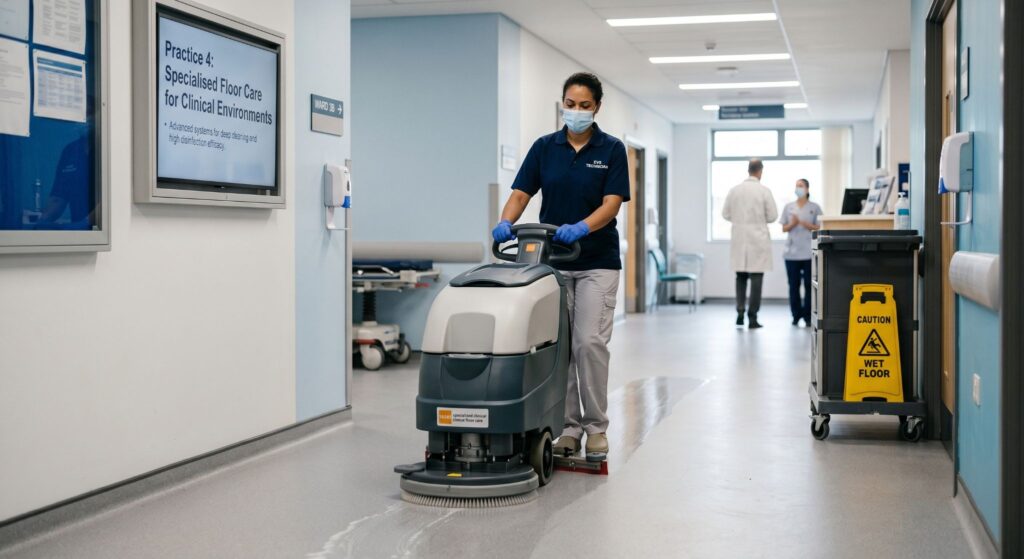
The floors within a medical facility are one of the largest sources of pathogens. Dirt, dust and human bodily fluids are constantly tracked into a facility on the soles of patients’ and staff members’ shoes. Distributing the mess around the floor, and then cleaning it up with the dirty water from the spills will only make things worse!
Hard Floors: In treatment rooms and corridors hard non-porous vinyl floor surfaces are used. These surfaces do not allow bacteria to penetrate into cracks and crevices in the floor. The first stage of cleaning these floor surfaces is to use a dry microfibre dust mop to remove any dust from the floor surface. This type of mop actively attracts dust particles picking them up in the microfibres and holding them on the mop. The dirty dust is then disposed of and the mop can be used again.
The floor surfaces are then cleaned using a two bucket cleaning solution method or by using a pair of flat microfibre cleaning pads which are interchangeable and never come into contact with dirty contaminated cleaning solution. Furthermore, vinyl floors require periodic buffing and burnishing. If a floor becomes heavily scratched, those micro-abrasions become safe havens for bacteria to multiply out of the reach of disinfectants.
Carpeted Areas: Clean carpeted areas of waiting rooms, consultation rooms, and administrative offices of practices on a daily basis. Vacuum all carpets utilizing a commercial grade vacuum cleaner fitted with a HEPA filter. HEPA filters are able to trap 99.97% of all particles as small as 0.3 microns including: dust mites, pollen, fibers, human hair, bugs and most importantly all airborne pathogens and germs that can cause illness and disease.
Practice 5: Proper Handling of Biohazards and Clinical Waste.
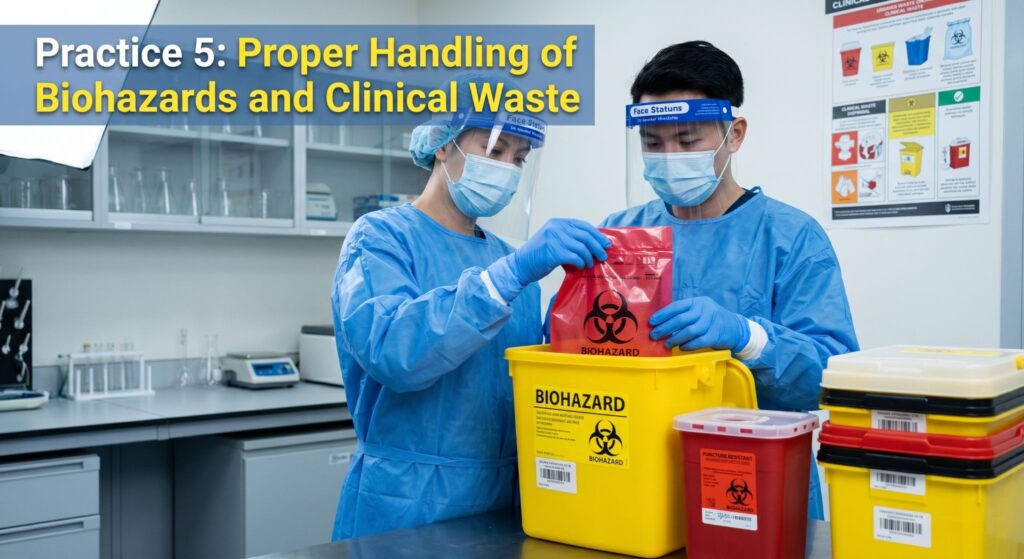
The medical centers generate very special types of hazardous waste with very high risk to occupational health and safety. These are the sharps waste (used syringes and needles, used scalpels etc.) and the clinical waste (soiled used surgical gloves, used dressings, used swabs etc. heavily contaminated with blood and other human body fluids from patients and from the treatment of patients in the various health care facilities).
Clinical Waste will be disposed of in the same manner that soiled or used items are placed in the correct colored bins, alternatively used sharp objects can be disposed of in a rigid sharps container.. However, the management of all clinical waste within the practice is the responsibility of the cleaners and they must be trained to handle all types of biohazardous waste. Most commercial cleaners are not trained in the safe handling of biohazardous waste and can actually pose a serious risk to themselves and others in a medical center.
Medical clinic cleaners are trained to work within a set of protocols detailing what can be cleaned and how best to go about it. As part of this, they understand the dangers of needles being squeezed into rubbish bags with hands and feet and that, should a sharps container fill, they must report this to practice management immediately. The only people who should attempt to empty them are trained healthcare workers. Clinic cleaners are also trained to work in clinical areas by wearing the correct Personal Protective Equipment including heavy-duty, puncture-resistant gloves.
Practice 6: Advanced Air Quality Control
Since the pandemic dust has become a real focus. More than just a cosmetic issue, dust carries lots of bacteria, viruses and even allergens on its surface. So in elite medical centers where the people who work there and visit there are most vulnerable to Respiratory Viruses it is very important that as much as possible is done to reduce the amount of airborne dust.
Traditional feather dusters are contraband in medical facilities, as they can spread rather than remove dust from surfaces and have the potential to distribute pathogens to patients’ airways. Damp dusting is the preferred method for removing dust from surfaces and using a disinfectant solution on a microfiber cloth is the preferred method for cleaners to physically remove dust from all surfaces including window sills and blinds, as well as from equipment. High level dust such as from the tops of door frames and from ceiling fans is also an area that is often neglected by regular janitors but must be paid close attention to in a medical cleaning program.
In addition to bringing dirt down from high surfaces such as the tops of door frames, ceiling fans and window blinds, specialized medical cleaners pay close attention to keeping the return vents of the HVAC system clean of thick dust build up.Dirt, dust, or pollen filling the vents causes the HVAC system to work harder in pulling air into alternative locations within the facility. People who regularly clean the facility may not normally think about cleaning the vents to a HVAC technician.
Practice 7: Stringent Staff Training and Auditing
There is much in the medical environment that can pose a risk to patients. With infection control being at the very heart of all health care environments, the biggest risk of all is that of the untrained cleaner. When dealing with highly specialized areas and treatments, the people who clean these on a daily basis need to have had the right amount of training in order to ensure that they are working safely and effectively.
In elite medical centers the cleaners need ongoing very specialized training, i.e. in the chain of infection, in bloodborne pathogen management, in chemical management using SDS, in privacy management. All medical cleaners work after hours when no one is around in all of the medical facilities, i.e. clinics, hospitals, surgical centers, medical centers. They come in contact with very sensitive information and diagnostic equipment. Therefore, it is of utmost importance that they maintain 100% patient confidentiality at all times and adhere to the Australian Privacy Act in all respects.
While trust is good, verification is better. Gifted Hands Cleaning staff are inspected periodically by our Quality Assurance team using fluorescent marking gels, or even ATP testing swabs to detect invisible residues of cellular matter left behind on surfaces. This work is among the highest of standards within our company, and we can provide Quantifiable evidence of a Super Clean Sanitized Environment at Gifted Hands.
Step-by-Step Zone Cleaning Guide for Medical Centres
Elite medical cleaning personnel recognize that the medical center is not just a room; it is an ecosystem of connected areas with dramatically different risks for the transfer and proliferation of disease organisms. Using a single general program for cleaning an entire facility would not only fail but potentially cause harm. As an alternative, many of the top medical centers use a strategic approach of cleaning by zones or sectors using a specific program for each.
Below is a step by step guide of how a professional will tackle cleaning each area of your health facility in order to keep it in the best possible state of hygiene to ensure the safety of you, your patients and your staff.
- Zone 1: The Reception and Waiting Area
The reception or waiting area is the front door of your medical center. It is the point where all external pathogens and germs are brought into the building by large numbers of patients and staff. This area also has a high risk of transmission due to the patient’s long period of time in close contact with surfaces and the air around them in the waiting room.
- The Focus: Visual presentation combined with aggressive fomite (shared object) management.
The reception / waiting room area requires a delicate balance of visual presentation and an aggressive approach to fomites. Even though patients will typically spend a short amount of time in these areas, many patients will also be experiencing anxiety or be feeling unwell. It is very important for patients to walk into a very clean waiting room in order to alleviate any anxiety they may be feeling.
As with the other areas in the practice, the cleaner must remove all general waste and utilize a HEPA vacuum for all carpeted areas to pick up any airborne pathogens as well as to improve the air quality in the practice. Also, a close inspection of the area will reveal many items including magazines and children’s toys that are commonly left on chairs and tables. These items are notorious for holding bacteria and must be either removed from practice on a continuous basis or thoroughly sanitized on a regular basis as determined by practice policy.
- Some of the more detailed actions include: Upholstered Waiting Chairs – Require Steam Cleaning on a regular basis to extract old contaminated material from seats and backrests. Upholstered Chairs – Require Daily Wipe Downs using blue-coded cloths and Hospital Grade Disinfectants on all hard-backed chairs, armrests and reception countertops. Entrance Floor Mats – Maintain at all times to trap dirt, moisture and outside germs and bacteria before they enter into Clinical Areas of the practice. Damp-Dust all HVAC Return Grilles in Waiting Area to ensure best quality of air is returned to and circulated among waiting patients.
Zone 2: Consulting and Treatment Rooms
Consulting and treatment rooms are the absolute sterile core of any medical practice. These are critical high-risk zones where patient examinations occur, invasive procedures may take place, and where biological material (blood, sweat, saliva) is frequently present.
- Zone 2 – The Cleaning of Terminal Cleaning Areas in Consulting Rooms.
As patients undergo examination and treatment in the Consulting and Treatment Rooms it is possible that biological material such as blood, saliva and human sweat will come into contact with surfaces within the zone. This is a high risk area and requires the Focus of Terminal cleaning and following of Infection Control Protocol to protect vulnerable patients.
In addition to the rapid clean-up between patients where relevant clinical staff may wipe down surfaces with approved cleaning agents, the intensive Terminal deep clean of the highest standards must be completed at the end of each trading day by a professional cleaner. These Terminal cleans will be a methodical top-to-bottom clean of all surfaces, including those that are left in place for patient use between cleanings.
When cleaning the equipment for examination rooms, cleaners will use the yellow-coded equipment to wipe down the examination beds (making sure to disinfect the vinyl beneath the paper roll as well as the equipment stands for diagnostic equipment.
The doctor’s desk and computer keyboards will also be given a thorough wipe-down. Clinical sinks are one of the greatest sources of waterborne pathogens, such as Pseudomonas aeruginosa, in healthcare environments and thus are given the most thorough scrubbing and disinfecting. Privacy curtains are monitored for laundering on a regular basis as these are frequently touched by both patients and doctors and are often left to be cleaned by amateur cleaners.
- Zone 3: Staff Breakrooms and Administrative Offices
Healthcare workers are the lifeblood of the healthcare clinic and the staff breakroom as well as the administrative offices that back onto the clinic are a very important area to keep clean and sanitized to prevent cross-contamination from the clinic and to also protect the health of the very people who work in the area to clean.
- The Focus: Preventing cross-contamination from clinical zones and fiercely protecting the health of the healthcare workers themselves.
Protocol for Cleaning Zone 3 – Staff Breakrooms and Administrative Offices: The areas where the health care workers, who are the lifeblood of any medical practice, eat and store personal items are of the highest concern for the health care workers. Since these are low risk for bio hazardous materials the focus will be on the same cleaning as commercial offices, but with the added focus of cross contamination from scrubs, hands, and shoes from high risk treatment rooms. Green equipment will be used for all cleaning in these kitchen type areas.
Staff may relax in a break room which is usually located near the administrative areas. Staff need to be protected in these zones also as they can be carriers of disease and if not properly cleaned and sanitized can transfer bio – material from clinical areas to non clinical areas.
The cleaning of areas such as these need to be completed with the same attention to detail and using the same standard commercial cleaning products, as with any other cleaning area but with a medical grade twist. In kitchen type areas of the clinic green code equipment must be used to clean and sanitize all kitchen type surfaces and utensils and in the administrative offices of the health care providers, damp dusting must be used to remove all dirt, dust and other matter from surfaces, shelving etc.
Sanitizing of all computer and photocopying equipment and other in and out put devices must be completed daily using safe electronic-friendly sanitizing products, to include: Computers, Keyboards, Mice, Telephones, Touch screens on copy machines, etc. In addition, the reception, billing and administrative staff are also at risk from such diseases as the common cold and influenza, so it is also very important to properly clean and sanitize surfaces, and to dust, vacuum and mop floors in these areas on a regular basis.
- Zone 4: Washrooms and Toilets
Public and staff washrooms throughout a medical facility are extreme high-risk biohazard areas for bacterial, viral and fungal infection and disease, and require the most aggressive cleaning & disinfecting treatment of any area within a facility.
- Zone 4: TheFocus – Eradication of bio-waste with zero transmission of bio-aerosol.
- The Protocol: There is a phenomenon known as toilet plume that is formed when waste is flushed in toilets, and is a mixture of water and air, that contains waste products. This plume is an aerosol and is violently ejected from the bowl in the direction of the ceiling, thereby dispersing whatever fecal matter and any associated pathogens throughout the entire bathroom, as well as into other parts of the clinic. This means that in a medical facility’s bathroom every surface could potentially be a biohazard. Therefore, the most intense level of sanitizing using the strictest red-coded cleaning equipment must be done on a daily basis in order to prevent extreme cross-contamination of potential pathogens to other parts of the clinic.
- Specific Actions for Toilet Sanitation: Daily scrub and disinfect toilet bowls, urinals and urinals, and Sinks. Sanitize all high-touch-point areas, including the inside and outside of door locks, sinks and faucet handles, toilet flush handles, toilet paper holders and roll covers, grab bars, and soap and paper towel dispensers. Thoroughly mop all floors using a TGA approved disinfectant that has been allowed the appropriate amount of time to dwell on the surface in order to kill all microorganisms. Regularly clean and treat floor drains to prevent the growth and build-up of biofilm, mold and odor causing bacteria.
The True Cost of Poor Cleaning in Healthcare
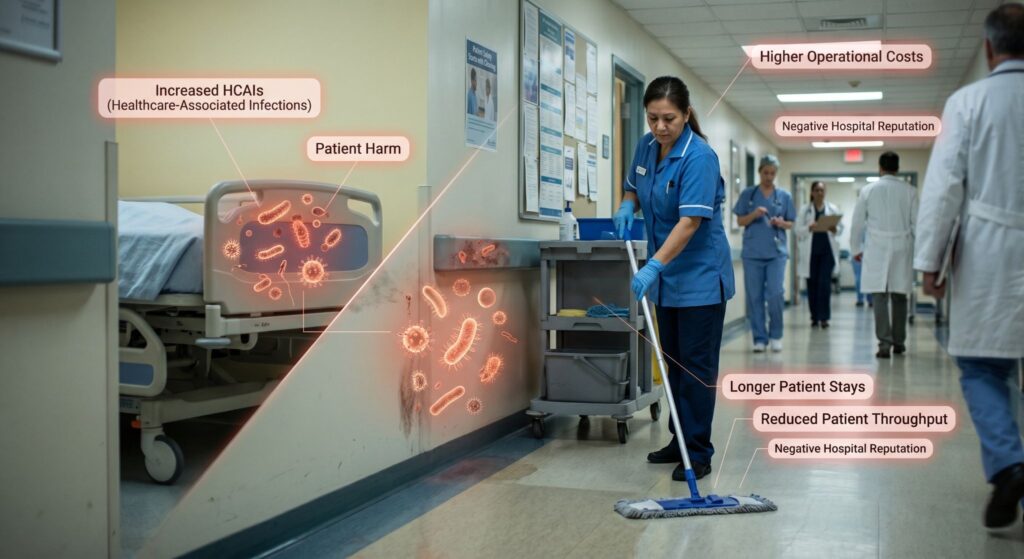
For those practices that view cleaning and maintenance with a view to it being an operational cost, or an investment to get more from their Practice’s day to day activities, there is a false economy at play here. The ramifications for a medical Practice in terms of its potential for serious damage to its very existence, as well as causing harm and in some cases irreversible damage to its and its staff’s reputation, are of serious note and must be given considerable thought in terms of the importance of cleaning in a Practice.
Catastrophic Damage to Clinic Reputation and Patient Trust
At this day and age, the perception of your ability to care for a patient can be instantly discredited upon them witnessing the unsanitary state of your medical premises. Rather than seeing the tidying of skirting boards and cleaning of glass doors as a task given to porters or janitors of a clinic, this must be taken seriously by every member of a medical team and the management of that facility.
Because, for example, a patient seeing an overflowing waste bin in a dirty waiting room could instantly and mistakenly believe that the equipment used by the phlebotomist to take their blood must also be covered in dirt and grime. Furthermore, this would only take one bad review on Google to spread word instantly to hundreds of potential patients causing irreparable harm to patient trust and your brand’s reputation.
Severe Legal Liabilities and Failed Health Audits
A failure to meet the hygiene expectations of a medical practice can attract serious attention from a variety of quarters. The State Health Department as well as practice accreditation bodies such as the RACGP view infection control and environmental cleaning with a very critical eye. During regular and also unplanned audits, great attention is paid to practices relating to these critical aspects of health care.
Inspectors will look for evidence that all staff are following all rules that relate to infection control and cleaning of all surfaces and equipment. There are serious consequences for practices that fail to meet hygiene expectations including; penalty, suspension of practice accreditation. In addition, a patient can also launch a medical negligence claim if they can prove that they contracted a Healthcare-Associated Infection (HAI) as a direct result of poor hygiene practices at a clinic.
Crippling Staff Absenteeism and Operational Inefficiency
Dirty facilities can spread disease quickly and in no time be the cause of a clinic outbreak of illness. The worst affected will be your staff and when they contract illness due to poor cleaning they will be off work for some time. When your best staff are down with a short term illness caused by dirty facilities, it can have serious effects on a clinic. Temporary locums may be engaged, shifts will become stressful as they are worked with fewer staff, appointments will be canceled and the resulting effect on a clinic’s bottom line will be extreme, along with the associated drop in staff morale.
How to Choose the Right Cleaning Partner: The Gifted Hands Cleaning Difference
One thing is crystal clear: the consequences of having your medical center cleaned by an inadequately trained / uninspired company can have serious implications. No practice manager would ever consider handing over the keys to after-hours cleaning by a regular commercial “janitorial” company. The reason a specialized health care cleaner is required is because they have experience in a health care environment and have a sophisticated knowledge of science relating to infection control, the rules regarding health care cleaning and patient safety.
When searching for a medical centre cleaning service, it is vital that the practice manager completes a thorough search and considers several key points or ‘deal breakers’ for selecting a cleaning company to clean their medical centre.
1. Specialised Healthcare Certifications and Comprehensive Insurance. The average commercial cleaner is not suited to entering a medical center after hours. Always check for specialised certifications for clinical cleaning, bloodborne pathogens and cross contamination. Check for comprehensive public liability insurance and workers compensation to ensure that the cleaner has been properly insured to enter your medical center.
2. A customized, evidence-based cleaning regime developed specifically for your practice. Practice managers cannot simply rely on a generic ‘checklist’ type cleaner as these cleaners generally do not possess the relevant knowledge or training to meet the specialized cleaning needs of the healthcare environment.
Practice managers must look for providers who will first conduct a thorough on-site assessment of their medical center and who will then develop a cleaning schedule that sets out specific high-risk zones, details out the range of approved TGA chemicals that they will use and outlines the frequency of cleaning of high-touch surface areas.
3. Stringent Staff Vetting and Ongoing Training. A number of night time hours are added each week at the medical centre cleaning and so it is essential that the cleaner has access to the premises after hours. However, as sensitive areas of the practice are left in ‘clean’ mode after hours it is essential that a practice can trust the cleaner to lock up after night and also have access to all practice areas to complete the night’s cleaning.
As such, the vetting of any cleaner entering the premises after hours must be rigorous and the cleaner must be continually updated on the latest methods of infection control and also made aware of the practice’s strict use of PPE. The cleaner must also be aware of the Australian Privacy Act and practice policy and procedures for confidentiality of all patients.
4. Transparent Quality Assurance and Auditing. It is not good enough for a cleaner to say they are Medical Centre Cleaning Practices on a night time basis. Evidence of the quality of cleaning that is being provided on a night time basis must be provided to you on a regular basis.
Elite medical centre cleaning measure and report on their work using a range of metrics and conduct regular quality assurance checks, including on-the-spot checks by a supervisor or using an auditing tool such as ATP testing or fluorescent marking. These audits must be conducted regularly and reported on in a transparent manner using quality assurance metrics that allow you to clearly see the standard of cleaning that is being provided on a night time basis.
The Gifted Hands Cleaning Difference
At Gifted Hands Cleaning we don’t just clean medical facilities; we partner with medical staff to protect their patients and their practice. Our work is an extension of the treatment that is given to patients by medical staff.
Partnering with the industry leader for medical centre cleaning, Gifted Hands Cleaning offers expert, fully vetted staff using color-coded systems and the highest grade of equipment and chemicals. With forensic attention to detail all consulting rooms, waiting rooms and bathrooms are cleaned and sterilized to the highest standard using HEPA filtered vacuums and premium TGA approved hospital grade disinfectants.
We take the environmental cleaning and infection control out of your hands so you can focus on your patients. We provide the detailed documentation and highest standards required to keep your health care facility audit ready at all times. By having Gifted Hands Cleaning carry out the environmental cleaning in your medical center on a regular basis, your doctors, nurses and staff can provide the best possible medical care to their patients in the cleanest possible environment.
Frequently Asked Questions (FAQs)
1. How frequently must a medical center undergo a deep cleaning? General cleaning and disinfestation of all high-contact-surfaces in a medical center need to be carried out on a regular basis – daily in high usage cases. Periodic deep cleaning allows a medical center to return to a proper hygiene state and is needed as frequently as every 3 up to 6 months, depending on the size of the medical center in question, the amount of patients it treats and other services offered there. Walls could be washed, floors scrubbed, carpets and interstices deeply cleaned and all higher parts of a room thoroughly cleaned and disinfested as well.
2. What is terminal cleaning and how often should it be done? Terminal cleaning is the most thorough cleaning of a room, involving disinfection of all surfaces, from ceiling to floor, and all removable equipment, in order to break the chain of infection and ensure that no organism can survive to infect the next patient. Terminal cleaning is required after every patient, especially those with infectious diseases such as MRSA or those with active cases of COVID-19, and after each use of an operating room.
3. Are eco-friendly products safe and effective for Medical Centre cleaning? Eco-friendly products can be effective for Medical Centre cleaning, as long as the correct product is chosen and is approved by relevant governing bodies. Many commercial green cleaners do not have the necessary level of antibacterial activity for use in clinical environments. However, there are now a number of TGA-approved hospital-grade disinfectants available which are environmentally friendly and do not contain harsh toxic chemicals.
They have been proven to effectively kill pathogens while also reducing the amount of Volatile Organic Compounds (VOCs) that are released into the environment. This makes them ideal for use in all healthcare facilities as they are safe for staff and patients with respiratory sensitivities and are also better for the environment.
4. After-hours Medical Centre cleaning – how will patient confidentiality be maintained? The maintenance of patient confidentiality in compliance with the Australian Privacy Principles (APPs) is a major priority for us. All of our cleaners are fully background checked prior to commencing work and then sign confidentiality agreements prior to commencing work in your practice.
They are also specifically trained in patient confidentiality. At no time will any of the documents that are loose in practice be read or moved. Patients’ files will not be moved from practices’ sites. Practices will be locked and left secure at the end of shift.
5. Do medical cleaners handle clinical waste, such as sharps and biohazard bags? The general waste will be managed by the medical cleaners but the dedicated clinical waste (yellow bins) and rigid sharps containers will be handled by the specialized medical waste disposal contractors. The biohazard awareness training that our medical cleaners receive will enable them to safely identify potential risks and report any found clinical waste or overflowing sharps containers to practice management to prevent any potential injury from a needle-stick.
Conclusion
Medical Centre cleaning is the absolute foundation of patient safety and clinical excellence. So in order to provide a safe and healthy environment for your patients and the best possible care for them, there are certain fundamental ways to maintain that level of cleanliness.
By implementing a system of color coding for different areas of the medical centre, using only TGA-approved disinfectants for all sanitation, and rigorously targeting all of the highest touch points in the cleaning of your medical centre, you can guarantee a far higher level of cleanliness than simply wiping down surfaces with commercial grade wiping products found in stores and shops everywhere. There really is a world of difference between general commercial wiping and specialized medical sanitation.
Don’t risk the health and compliance of your business and facility by leaving it to chance. Gifted Hands Cleaning has the experience and knowledge of all aspects of the cleaning and sanitation of Health Care Facilities. Call us today for an obligation free quote tailored to your individual requirements for the best medical center cleaning.