


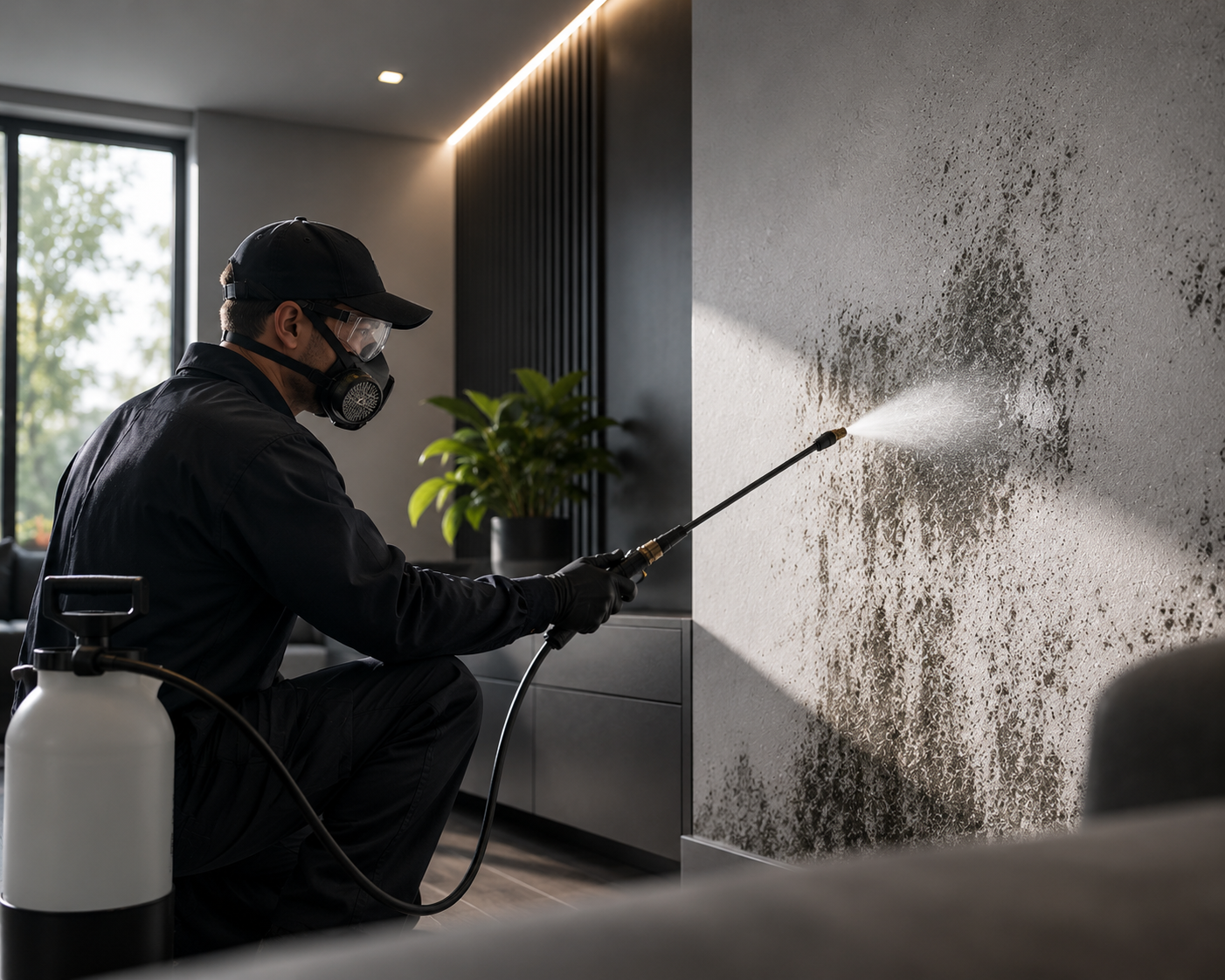
Mould Prevention in Adelaide
Mould prevention in Adelaide during the beautiful cold weather of an Adelaide winter can be devastating to your home with condensation and dampness. Musty smells, small black dots or spots on walls, ceiling, windowsills and bathrooms are increasingly becoming an ongoing problem for many Homeowners, Tenants and Property Investors across South Australia.
Why do some properties suffer from house mold growth while others do not? A combination of the unique Mediterranean climate with cold wet winters and very hot dry summers along with modern buildings featuring tightly sealed energy efficient homes that lock in moisture cause houses to develop internal damp problems.
Mould prevention in Adelaide methods employed by homeowners to the myriad of situations, throughout the homes of Adelaide’s residents are often ineffective. Because of Adelaide’s unique Mediterranean climate of cool and damp winter periods, and dry hot summers, it’s a haven for mold, fungi and even more terrible organisms.
Coupled with the modern homes that have been sealed up with polyurethane-type foams to make them energy-efficient, it’s a formula for creating unhealthy houses that cannot ‘breathe’. The air becomes trapped and moisture is unable to escape thereby creating the ideal environment for organism growth, leading to severe health issues for the occupants.
With a high incidence of asthma, and related breathing complaints, it is critical that all instances of mold and associated organisms are removed thoroughly and completely, eliminating any chance of them returning. Unfortunately, it is all too common for people to try mould prevention in Adelaide themselves using bleach, only for the problem to return weeks or even months later.
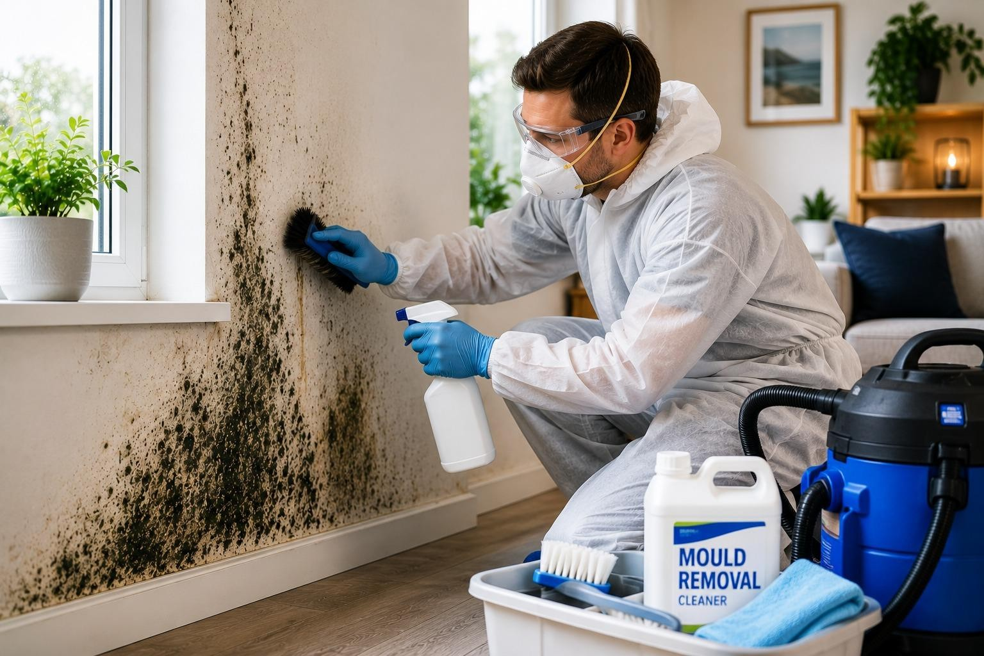
In this in-depth House Mould Removal Adelaide guide, we delve into the reasons behind dampness in houses in South Australia and the causes of mold growth.
Also detailed is who is responsible for fixing mold problems in rental properties, the potential health problems caused by mold, and how to remove mold from a house using methods that Gifted Hands use to remove mold.
You will also find a local checklist of items to keep in mind to stop the problem of black spots reoccurring in your home. Learn how to return your house to a safe, healthy environment that you can live in comfortably.
Why Mould Is Becoming a Bigger Problem in Adelaide Homes
Mould is spreading throughout South Australia, especially in Adelaide. Why is this happening? The Mediterranean climate in Adelaide’s long dry summer followed by cold and wet winter creates a perfect combination for condensation to form within homes.
While there is warm, moist air from inside the home it hits cold surfaces such as single glazed windows, concrete, brick etc. This moisture provides the perfect medium for dormant mold spores to start growing once the humidity in the air reaches the correct level.
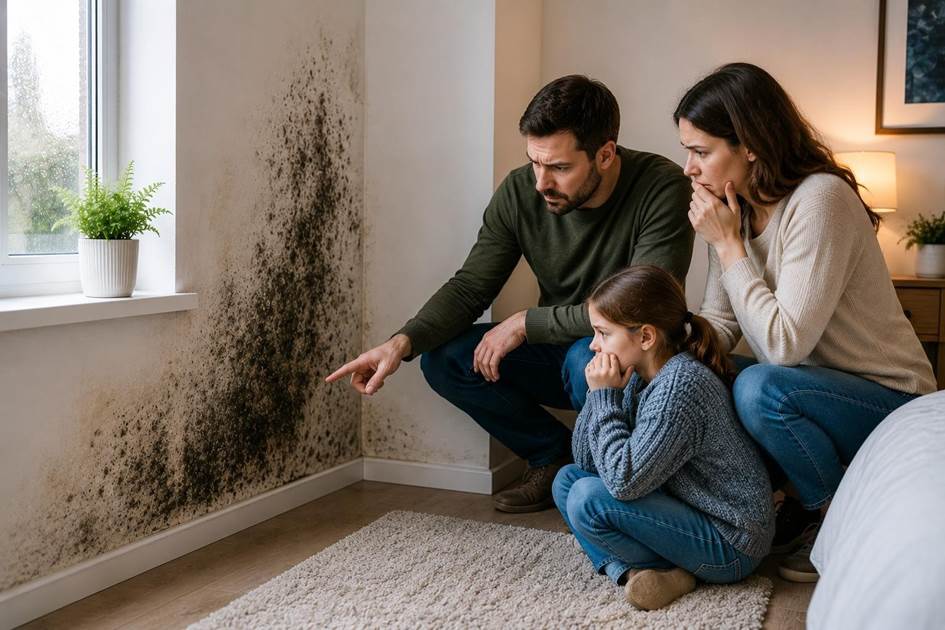
Another important factor to consider is how homes are built and how people live in them today compared to previous generations. While newly constructed homes in growing suburbs such as Mount Barker and Northgate are well sealed to maintain energy efficiency and decrease power bills for homeowners, these homes are also poorly equipped to deal with high levels of moisture in the air from occupants.
As buildings become more airtight, with less chance of natural ventilation occurring than in older homes, moisture from occupants’ breathing, cooking, and personal cleaning will find less opportunity to escape. This increased moisture in the air can cause problems with fungi in homes and create ideal conditions for mold and mildew to grow.
In contrast, old character homes within inner suburban locations lack the appropriate passive ventilation in the design of these heritage buildings. Older homes have been poorly modified for increased moisture laden activity in recent times.
Finally, there is the current state of the housing market. More and more people in Adelaide are renting properties and sharing houses with other people and with families. The design of houses, whether old or new, is not able to cope with increased numbers of people. There are more people and so there are more hot showers, more cooking, more wet clothes to dry.
Tenants in rented houses are reluctant to run their heaters or to use the exhaust fans as this costs money and there is pressure to keep costs down. Some people are unaware of how to improve ventilation in a house that they are renting.
The climate, the way houses are designed and built and the way people live in their houses has created a perfect storm. It is more important than ever for people in Adelaide to take mold prevention seriously.
The 7 Warning Signs Mould Is Already Growing In Your Home
Early detection for house mold removal is crucial for your home’s structure as well as your health. Large black patches of mold can develop on your walls before you even realize that mold exists in your home. Locally, we are able to provide the best House mould prevention in Adelaide services and offer you the 7 key indicators for early detection of hidden mold in your home.
Damp Odors: Musty smells such as the smell of earth, dampness and even mildew in wet areas like bathrooms, laundry rooms or stored items in dark damp basements could be an indication of hidden black mold growth even if you cannot see it.
Visible Spores and Spots: Sometimes the signs of black mold can be so subtle that they are mistaken for dirt. Visible mold can present as large black or greenish patches on surfaces, as powdery patches or even just as small individual black dots., damp basements.
Visible Spores and Spots: Black or greenish patches, powdery patches or even small black dots can form on surfaces and are often mistaken for dirt. The spots can appear as small clusters or as single growths.
Peeling Wallpaper and Bubbling Paint: One of the methods that mold uses to escape from within the walls of a home is by pushing itself out through paint or wallpaper. If you notice that your paint is starting to bubble or is beginning to flake and develop cracks, or that your wallpaper is starting to peel from the walls at the seams, you should assume that there is a case of mold growing within the walls. In this situation you will require the House Mould Removal Adelaide services of a trained mold removal technician.
Persistent Window Condensation: As a general rule condensation is normal on cold Adelaide mornings however if there is excessive moisture that continually forms on your windows and pools on the sill then there is potentially a large amount of moisture in the air that is looking for a home and mold is no exception.
Damp or Warped Skirting Boards: Skirting boards are typically made of timber which follows the natural course of water (down). If your skirting boards appear to have been subject to excessive moisture they may develop water marks or begin to warp and feel spongy to touch. The underlying cause of this could be a rising damp issue or a leak of some description. Either way the outcome is the same – moisture providing the ideal environment for mold to develop.
Unknown indoor allergies and illness: Stinging, sore and itchy noses, sneezing fits and sore throat are among a host of symptoms caused by mold spores in the air we breathe, commonly bringing on severe, persisting bouts of allergy.
Dark or Dirty Grout: Grout in your bathroom can sometimes have stubborn stains but typically these can be removed with normal bathroom cleaners. However if the grout has penetrated deep into the material and is harboring mold then it will require House Mould prevention in Adelaide services of a professional to rectify the problem.
The Real Causes Of Mould Most Adelaide Residents Don’t Know About
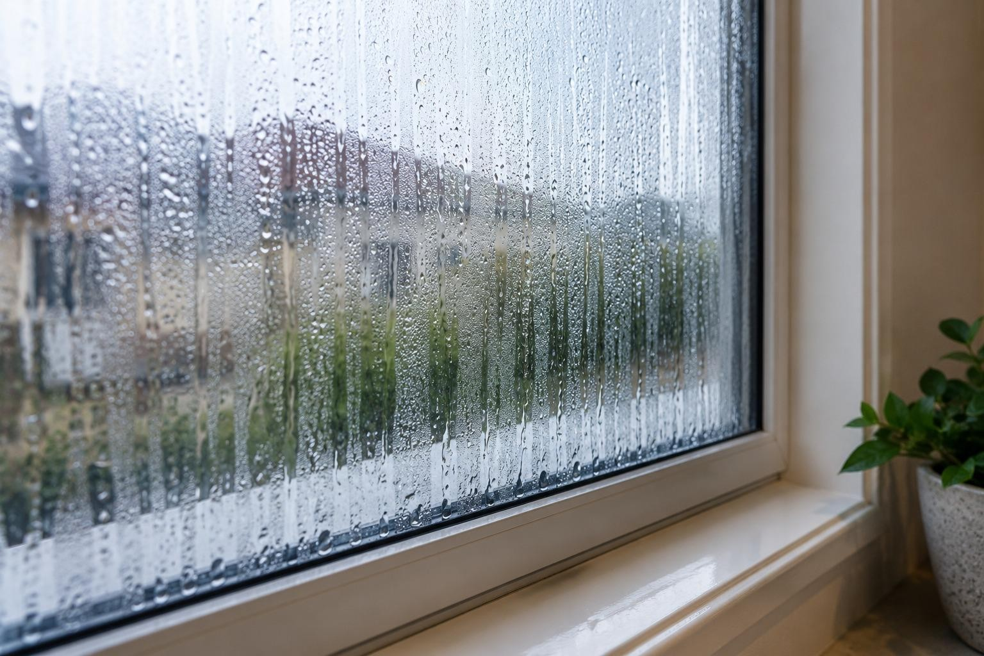
Mold is one of the world’s most hardy organisms. When it finds a place with three key elements it can begin to survive and spread rapidly. First, there must be oxygen. Secondly, there must be a porous food source to sustain it such as timber, plasterboard or even clothing.
Lastly, and most importantly, there must be moisture. For mould prevention in Adelaide to effectively clean mold on a long-term basis, one must first understand the source of the moisture in the first place and that moisture can often come from many different sources.
- Condensation: South Australia’s Number One Culprit When it comes to causes of damp in homes in Adelaide, by far the most common cause is condensation. Condensation is formed when warm, moist air comes into contact with a cold surface, and rapidly cools and condenses into water.
- In the winter months South Australians are to be expected to turn up the heat in their homes. This warms the air in homes, which has the capacity to hold more moisture in the air.
- This warm, moist air is then released into the cooler air outside the home and condenses. The moist air released by the heating is in contact with many cold surfaces including exterior walls that lack adequate insulation, window frames made of aluminum or other metal, and single glazed windows.
- The water that forms as a result of condensation must be manually removed on a regular basis, otherwise it will soak into window tracks, penetrate behind curtains, and into adjacent areas of plasterwork and drywall. Once moisture has penetrated into these areas it provides an ideal environment for mold to germinate and grow.
- Rising Damp and Poor Drainage Many homes in Adelaide’s older suburbs are amongst its most popular, homes such as those found in heritage streets in Prospect, Norwood are sought after by home buyers.
- Often built pre 1950’s these homes lack the benefits of modern construction techniques, such as damp proof coursing (DPC) and sub floor ventilation, leading to many homes suffering from serious problems of rising damp.
- Additionally homes built on sloping ground and located on the notorious reactive clay soils found throughout Adelaide can experience severe problems with ground water leaking against exterior walls of homes.
- This water can then enter the home through cracks and other weaknesses in the masonry below floor level. Once inside the home the water creates ideal conditions for the growth of fungi and giant mold colonies. They can grow behind large pieces of furniture, beneath floorboards and along the lower section of internal walls.
- Hidden Leaks & Free Flowing Water (Roozing pipes) and Blocked Gutters And Downpipes – yes this contributes to mold problem, often we find that a small leak in a washing machine hose or a burst hot water system can leak into ceiling or walls for months creating perfect conditions for mold to develop before being found.
- Blocked roof gutters are another cause of problems for many homes particularly those surrounded by large numbers of trees, a number of Adelaide homes have been found to have moldy ceilings caused by roof gutters overflowing in heavy wet weather with water entering the roof space. This then seeps down into the wall cavity allowing for optimal conditions for mold to develop within the structural timber.
- Lifestyle Factors. In addition to how a home is built, there are many factors associated with the modern way of living that have the potential to create problems with mold in homes. The first factor is how homes are currently sealed for energy efficiency.
- To keep your home warm during the cooler months and reduce your electricity bill homes are now sealed with the best materials to insulate your home. For mold to grow it requires oxygen, a porous food source and moisture. The moisture in the homes in South Australia where I live comes from various sources, but the most common form of moisture for mold growth is condensation.However, there are many other sources of moisture in homes today.
- Drying clothes on clothes horses inside homes is a major contributor to moisture in homes, with several liters of water vapor being released into the air every time clothes are dried. In addition to clothes, boiling pots of water on stoves and taking long, hot showers or baths also release large amounts of moisture into the air. Unless this moist
air is able to escape the home and be replaced with drier air, it will find its way into fabrics and into other parts of homes where it can lead to the growth of mold.
Is Mould Dangerous? Understanding the Health Risks
Mold and mildew on walls and surfaces and musty smells in homes are more than ugly black stains and foul odors. The fact is that mold has been declared a biological hazard and can cause serious health problems for you and your family.
When a mold colony grows it will naturally release millions of tiny spores and volatile organic compounds (VOC’s) into the air that you breathe 24/7.
These airborne pollutants can cause serious health problems even for people who are otherwise in good health. However, there are groups of people that are more susceptible to health problems caused by mold than others.
Prolonged exposure to the airborne particles and gases given off by mold can have a number of different adverse health effects on adults. However, the effects of exposure to damp indoor environments can be more serious for certain groups of people.
SA Health recommends that infants, young children, the elderly and people with a weakened immune system or pre-existing respiratory problems avoid exposure to damp environments as they are particularly susceptible to serious health effects.
But for families already living with asthma or allergies, a home with mold is particularly problematic. “Asthma can develop in children who have no previous history of the condition due to exposure to dampness and mold in the home,” National Asthma Council Australia warns.
Children and adults with allergies can suffer from a range of severe and even life-threatening reactions to mould, from causing chronic allergic rhinitis with symptoms of a stuffed up nose, sneezing, itchy, watery red and sore eyes and even skin rashes and sinus infections, according to Allergy & Anaphylaxis Australia.
But the greatest danger to health from mold is the presence of toxic strains. Some of the molds in this group have the capacity to produce mycotoxins which have the potential to cause serious illness in both humans and animals.
Because some of these black molds are far more toxic than others it is strongly advised that any suspect toxic black mold is not attempted to be removed by the home owner. Because the spores of any mold are contained within the mold mass any disturbance of the mold will release the spores into the surrounding air.
This can have serious consequences for individuals with respiratory problems. Black Mould Removal Adelaide companies have the necessary training, experience and equipment to safely remove toxic black mold from your home or business.
Using specialized containment barriers to stop the mold spores from spreading, they will use commercial HEPA air filtration equipment and wear the necessary industrial-grade protective equipment to complete the job safely and effectively.
Highest-Risk Areas For Mould Growth And mould prevention in Adelaide
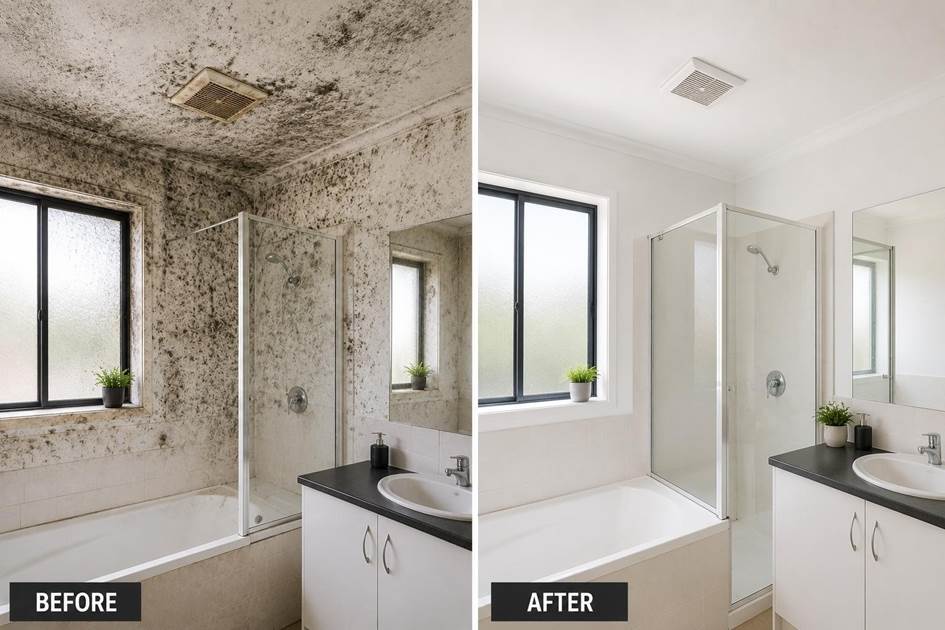
While every room in your home contains floating mold spores they are not just going to start growing in every spot within the home. They are looking for microclimates within a home that can provide it with three essential components for its survival: darkness, stagnation of air, and high humidity. We have seen that there are a number of rooms within an average Adelaide home that are far more prone to these conditions than others. Here’s a quick-reference risk table to identify the worst affected rooms, the underlying causes and what you can do to mitigate the problem and keep the mold at bay.
Wet Areas: The Ultimate Breeding GroundBathrooms & Laundries are the most high-risk areas in your home. Showers and washing machines can produce huge amounts of steam which is trapped in your bathroom if there is no powerful externally ducted exhaust fan.
The steam then condenses on the ceiling, mirrors and tiles creating perfect conditions for black mould growth. Once the black mould has entered the grout or bathroom silicone, scrubbing the surface with bathroom cleaners will have little effect. It is then time to call in the professionals for a Bathroom Mould Removal Adelaide service to remove the colony completely without having to tear out your tiles.
Wardrobes and Kitchen Cabinets can also harbor the growth of mold and mildew. Wardrobes built into cold external walls of properties, particularly those with inadequate insulation, can have poor air flow between garments and the back of the wall.
This results in moisture-laden air condensing on the cold surface of the wall, transferring onto clothing, shoes and other leather goods stored nearby. Kitchen cabinets, especially those in dark corners of kitchens with slow leaking sinks, can also harbor growth of mold and mildew from the pot and kitchen equipment steam.
One other point to consider is that your floors make up the biggest filter in your house and therefore it is easiest for mold spores to fall to the floor and then be removed with dirt etc. The mold then settles into the carpet fibers of soft furnishings. This problem can easily occur if your home has a past history of dampness and the spores in the air have settled in carpet underlay.
Tenant Or Landlord: Who Is Responsible For Mould In South Australia?
Mould discovery in Residential rental properties can prompt instantaneous anger amongst tenants and landlords alike with Real Estate Agents, getting drawn into the controversy in the vast majority of instances, with many of the disputes often times managed by Real Estate Agents being owing to ambiguity surrounding specific points of South Australian tenancy legislation.
In relation to Residential rental properties regarding who should be paying for specific form of Cleaning such as for example the cost of mould remediation whereby determination by respective parties to the Lease of the root cause of moisture damage to rental premises will be required.
When is the Landlord Responsible for the Mould Removal? When a rental property becomes damaged in some way, the responsibility for repair will rest with the Landlord unless the damage has been caused by the Tenant’s negligence or misuse. So, if structural problems or continued maintenance failures result in moisture problems such as leaks from the roof, overflowing gutters, damp from below floor.
Level or lack of ventilation from items such as a broken exhaust fan or sealed up window then the landlord is responsible for the Commercial Cleaning Adelaide and mold removal.
Large residential rental portfolios, comprising Apartments and Townhouses, will require a contractor to provide 24 hour emergency Commercial Cleaning Adelaide for mold problems in order to provide a fast response to any problems in order to prevent further damage and maintain property value.
Who is responsible for black mold growth- the tenant or the landlord? Typically it is the tenant. Tenant responsibilities include maintaining reasonable cleanliness and looking after the property as if it were their own.
This includes telling the landlord/agent of any issues including water leaks etc. as soon as possible. Black mold in homes is caused from excess moisture/condensation in the home. As long as the home is in good repair then all moisture/condensation in the home is the tenant’s responsibility.
This includes; drying heavy wet clothes inside and leaving them to dry on drying racks during wet months, not turning off exhaust fans in the bathrooms and kitchen after use, not opening windows to allow air to escape during winter months.
There are many causes of black mold in homes and most are preventable. If there is evidence of black mold then get professional help to clean and treat the area before it spreads. If allowed to spread it could result in major repairs to fix the damage. The reason for cleaning and treating must be provided to support the request to have the area treated for black mold.
When to Use End of Lease Cleaning for Mold? It is not uncommon for issues of mold to be discovered by tenants during their final inspection of a rental property. In many cases issues of mold will be found to be as a result of condensation in the home caused by the tenant’s way of life.
As a tenant it is highly recommended that you seek the services of a End of Lease Cleaning company that includes the treatment of mold in their scope of work. This will ensure that any issues of mold are addressed in the best possible way and any potential disputes with your landlord over your full return of your bond are avoided.
Why Bleach Usually Doesn’t Solve The Problem
At Home Maintenance Central we service homes throughout Adelaide. Whether you need mould removal from the ceiling or some black spots in the bathroom we can remove growth with our mould prevention in Adelaide services.
If you see black spots on your ceiling or in your bathroom it’s common practice to reach for the bleach under the sink and give the area a good spray. Many home owners believe that as bleach kills germs and bacteria it will kill the mold.
However, this is one of the biggest myths in home maintenance with regards to mold treatment. Bleach does not effectively penetrate surfaces and as such is not a suitable method for removing mold from a building.
The biggest mistake people make when it comes to mould prevention in Adelaide residents need to realize that bleach is a household chemical, primarily made up of water (90% plus). The tiny amount of sodium hypochlorite (chlorine) in bleach cannot penetrate into porous surfaces such as plasterboard, timber and tile grout.
The surface layer of the mold is killed leaving the appearance of the black spots removed. In reality the roots of the mold (the mycelium) have been left to grow with the heavy water content of the bleach penetrating deep into the pores of the surface material.
After surface mold is killed using the chlorine from household bleach it may appear that all mold has been eradicated – until weeks later black spots reappear from the pores of surfaces. Heavy water in Bleach enables the solution to penetrate below surface layers and wet the mycelium deeply, allowing the fungi to continue growing in a moist environment – until the chlorine evaporates.
In addition to simply disguising the worst of the problems with a temporary solution, many of the household remedies available from most supermarkets will actually work to fast deterioration of a wide range of finishes around the home including tile grout, paint and quality timber surfaces.
In fact, heavy bleach based products will simply waterproof the roots of the fungus, giving it the ideal conditions to grow to an even more serious problem and require a much more difficult and costly job of remediation in the long run. In reality, every case of fungal growth requires the total removal of all fungal material, as well as the source of all moisture. Effective removal of fungal growth is always a far more complex and time consuming job than a surface spray would lead you to believe.
Professional Mould Prevention in Adelaide: What Actually Happens?
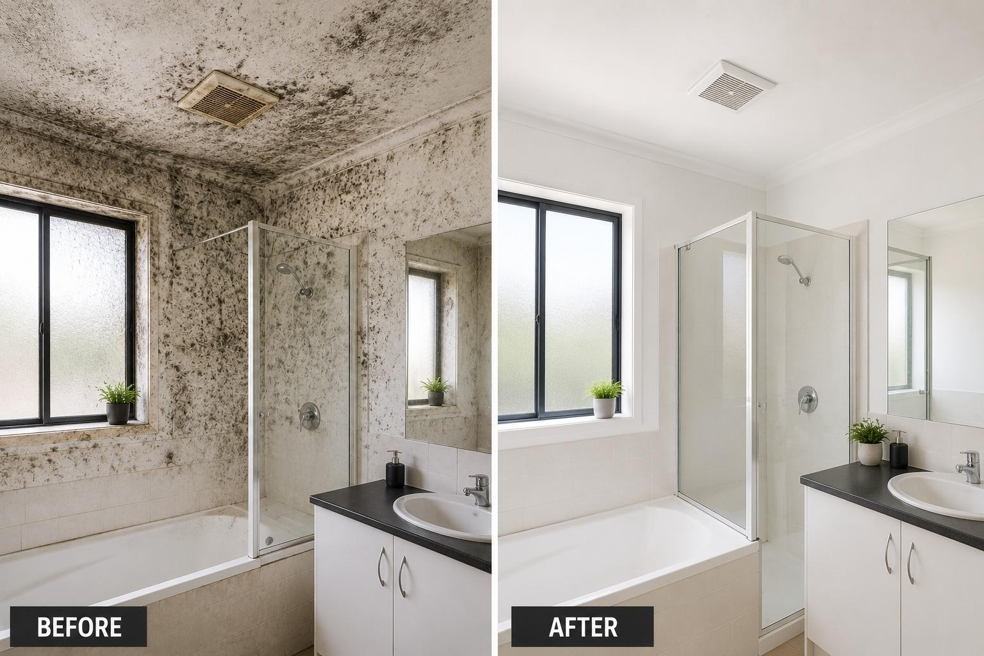
There is a massive difference between a standard clean and fungal infestation mould prevention in Adelaide to bring back order to your house with the work being carried out by mould prevention in Adelaide experts.
There is the chance that the homeowner might even look to hire a cleaner; however, cleaning simply removes visible dirt and grime from surfaces with fungal infestations and does not guarantee to remove the entire problem with fungal infestations.
There is so much more to the mould prevention in Adelaide process of a fungal infestation that what people assume, and in this case, the removal of the bio-hazard, killing the roots of the fungi, and trying to solve the environmental problems that have brought on the growth in the first place with fungal infestations.
Our comprehensive Mould Removal Adelaide service involves removing every last trace of the mold from your house and fixing the cause of the mold problem in the first place. Below you will find the process in full that we follow to guarantee our customers receive the safest, most effective, complete and permanent Mould Removal Adelaide solution.
- The process of mould prevention in Adelaide. Adelaide homes begin with a thorough and comprehensive inspection of all rooms to detect sources of moisture as well as extent of black mold growth. An in-depth assessment by our fully trained staff enables us to detect all cases of damp and black mold in homes. Utilizing the latest equipment in building inspection such as thermal imaging
cameras and digital moisture readers that produces a moisture map of walls, floors and ceilings. The moisture map highlights areas of moisture allowing our professionals to identify the cause of moisture damage whether it be from leaky pipes or penetration of moisture from ground due to rising damp, etc. The cause of the problem can then be remedied in addition to treating any black mold that has grown as a result of the problem..
- Safe Containment. The process of removing mold involves the release of massive amounts of tiny particles and gasses that can penetrate deep into the air ducts of a home, allowing them to distribute to every room in the home.
- We contain the area where mold removal is to take place using industrial strength plastic sheeting and block off all doorways to contain the “cloud” of particles and gasses released from the mold to that one area of the home. This not only helps to keep the mold spores from spreading to other parts of the home but also protects the remainder of the home and its occupants from potential exposure to toxic particles and gasses.
- We are using Industrial HEPA. Air Filtration in the area where the mold has contaminated. There are millions of tiny spores that are left behind after a disturbance and they can easily be spread throughout the home by the ventilation system to other rooms and be recontaminated.
- In order to keep the area that is contaminated with mold separate from the rest of the home, we use industrial HEPA air scrubbers. Our HEPA air scrubbers are designed to scrub the air within a contained area and pull out up to 99.97% of particles including all mold spores and VOC’s.
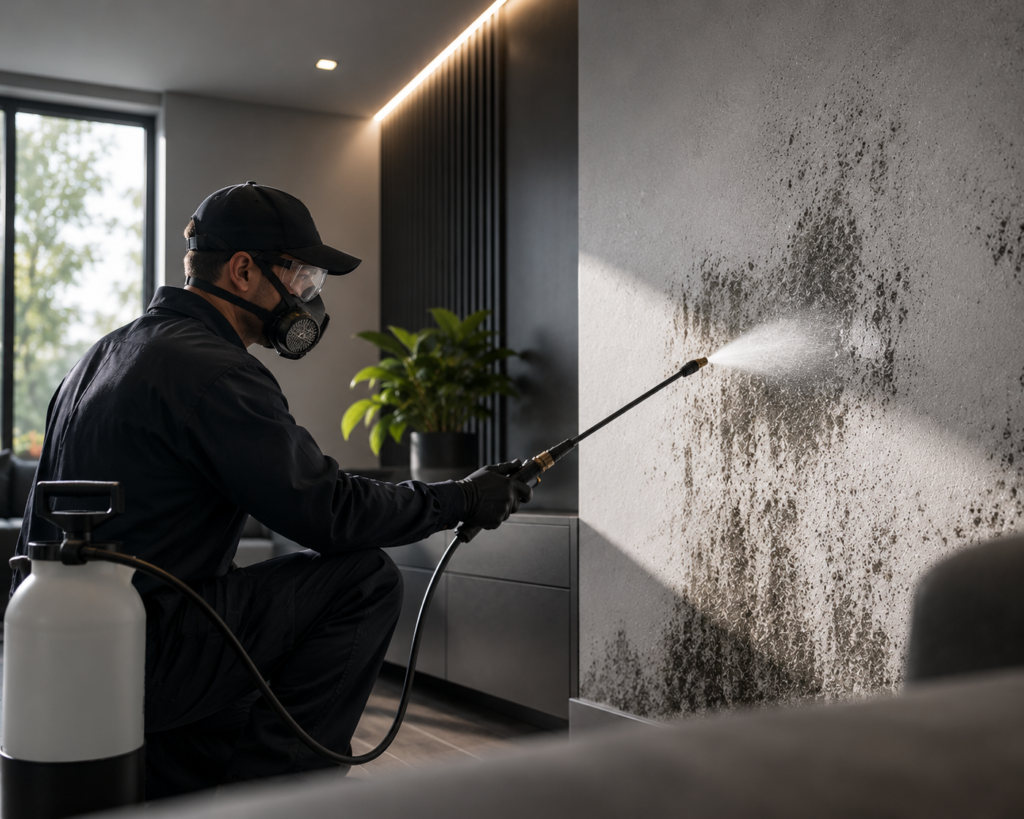
- Professional Antimicrobial Treatments. Gifted Hands specialize in the use of a wide range of unique solutions that are specially designed for professional use only. As opposed to the myriad of household cleaners such as bleach that simply mask the symptoms of mold for a short time, our extensive range of high performance Antimicrobial Treatments penetrate deep into materials that are notoriously difficult to clean including plasterboard, rendering surfaces, concrete, brick, render, stumps, wooden decks, and basically any other material where a mold or mildew problem exists.
- These Mould Treatment Adelaide products are 100% biodegradable, non-toxic, and completely environmentally safe. After application, the biocidal agents work their way down into the deepest parts of the substrate, and at a cellular level, systematically destroying every single cell of the mycelium (mould root system) until every last trace of the unwanted fungus has been completely removed, thus giving the surface a solid, long lasting cleaning.
- The professional strength formulations also work to effectively eliminate and neutralize bacteria, fungi, yeast, spores, and mold to eliminate the risk of re-growth for many years to come.
- Deep Cleaning and Stain Removal. As part of our Mould Removal service, we also focus on a deep clean of your property and removal of any stubborn stains left behind by fungus and mold growth.
- In order to achieve this, our Adelaide Mould Remediation team will physically remove the dead fungus from your walls and ceilings and apply specific products in order to lift any stubborn stains and marks from tile grout and walls.
- Once the appropriate products have been applied and have had time to work, our team will then scrub all surfaces with professional grade cleaning equipment in order to remove any stubborn stains and to leave your property clean and ready for you and your family to return to.
How To Prevent Mould Returning (The Adelaide Checklist)
We also look at the best ways to keep your home and premises free from damp and mold growth over the long term once a remediation job has been completed and professional remediation work has been done on your property and building.
Because of the natural presence of millions and millions of microscopic mold spores found everywhere outdoors – so cannot be avoided – it is not possible to keep a home and building and residence ‘mold-free’ for good, but there are effective steps and methods to keep moisture to a minimum, especially important during the colder, wetter months of winter in Adelaide from June to August and also in maintaining optimum humidity levels and good airflow at all times throughout the year.
Our mould prevention in Adelaide Checklist was put together to help you protect your home and your family’s health from long-term damage by following the simple habits that become second nature to you and your household in no time.
- Morning Ventilation: Ensure your home is thoroughly ventilated every morning, regardless of season. After being sealed up overnight, buildings hold a lot of stale and moist air. Open your windows and cross vent your home for at least 15 to 20 minutes to remove all of this stagnant air and to allow fresh air to find its way into your home.
- Ensure External Exhaust Fans are Operating: Stove extractors, and fixed ducted exhaust fans must be operating while you are cooking, or boiling water and running hot showers, and for at least 20 to 30 minutes after completion of the hot activity to remove the released moisture from the air.
- Use a Dehumidifier: Sometimes when it is very wet outside it will not be possible to open up windows to allow moisture to escape from your home. A good quality refrigerant or desiccant dehumidifier can be very effective at removing liters of moisture from the air in your home’s high risk areas such as your laundry or master bedroom.
- Inside Wet Clothes: Do not dry clothes, especially those dripping with water, on indoor clothes horses. Instead, dry out a small room such as a laundry, bedroom, using a dehumidifier or open a crack to pull excess moisture from the air to try and dry it out as quickly as possible.
- Heavy pieces of furniture like wardrobes, beds and sofas should not be pushed up against the cold damp wall of a room. Leave a 5cm space between the back of the furniture and the plaster and allow warm air to penetrate to the back of the furniture to prevent condensation.
- Fix Leaks: A slow drip from a vanity tap, a running toilet or a blocked roof gutter can contribute to an enormous amount of moisture in the wall cavity of your home allowing
massive fungal colonies to develop over time. Don’t discount the smallest of leaks thinking they are insignificant. Fix them straight away.
- Consistent Domestic Cleaning: If the same mold spores are continuously being vacuumed up from surfaces, such as from window tracks and other surfaces in the home, then the chance for new mold colonies to develop from those very same mold spores is stopped and thus aid in preventing a full infestation of mold in a home. It is a good idea to book regular Domestic Cleaning Adelaide sessions in order to protect your home from a full reinfection of mold and or fungus.
The Cost Of Ignoring Mould
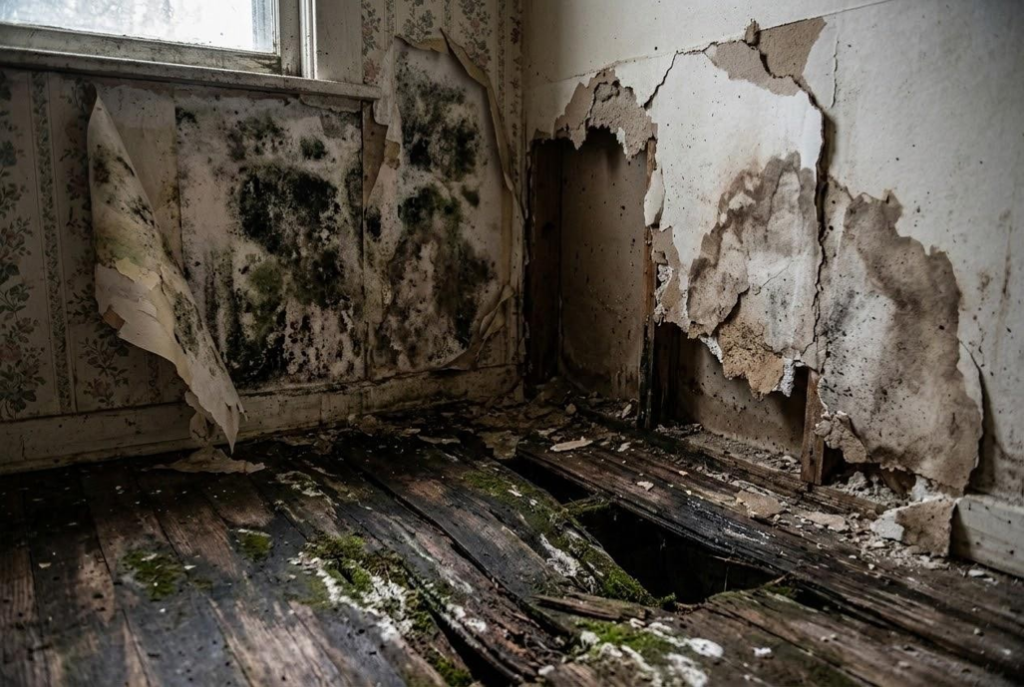
Most homeowners tend to ignore small patches of mold within their homes thinking that it can wait. However, by the time you notice a patch of black mold within your home, it is most likely already too late and can end up being one of the most expensive mistakes that an Adelaide property owner can make.
Why? Because mold is not a static organism and it grows in all directions. Mould feeds on building materials of homes, and in doing so it creates large roots within the timber causing structural damage. What started off as a simple surface cleaning job
can turn into a very expensive repair bill for structural damage of the worst kind, such as expensive hardwood floorboards, plasterboard walls and damaged support beams.
The first cost of ignoring mold in your home is severe structural damage. The mold roots will go deep into the timber of your home and destroy it slowly. They will rot expensive hardwood floorboards, break down the structural integrity of the frames of your home and cause drywall to crumble and deteriorate. So what seems to be a job to give your home a bit of a clean is actually a job to try and save the structure of your home and cost tens of thousands to repair.
The worst part is that the cost of repair will be catastrophic to your finances and can mean that you have to spend thousands of dollars to replace plasterboard and severely damaged support beams in your home.
Furthermore, mold can devalue the value of a property. There are many cases where even a small patch of mold has detoured prospective buyers. Mould also reduces the amount of time a property will be on the market and can drop the list price of a property by thousands to reduce holding costs and avoid further damage. In addition, hidden musty smells can affect a property in a similar way and be far more difficult to remove.
Lastly, we can’t stress enough the health related issues that affect every living person within a home that has been invaded by black mold, such as serious respiratory problems leading to consistent visits to the doctors and long term cost of buying over the counter asthma medications for life for all people in the home. This will also have an affect on family members’ work/school life leading to loss of income/productivity.
Conclusion & Next Steps
Don’t let mold problems hang around for Spring. Given the cool, damp winter that Adelaide is currently experiencing and the fact that modern homes have become far more sealed environments than in days of old, it is not difficult to see how a small amount of condensation can very quickly snowball into a major problem causing serious structural decay and potentially cause serious health problems for you and your loved ones.
By tackling mold once and for all you can protect your largest asset and the health of your greatest asset (your loved ones).s. We have seen time and time again how a simple supermarket-grade bleach can mask the worst of problems.
Likewise, how a quick once-over with some scrubbing can allow a root system of hidden mold to re-grow and re-emerge time and time again. Instead, using the latest technology in industrial grade treatments, we tackle each unique situation with a science-backed solution to completely kill off all mold spores at their root.
We are Gifted Hands Cleaning Services, Adelaide’s leading experts in comprehensive property care. With the highest quality cleaning equipment and Industry leading products, our team of Adelaide cleaning experts provide the most advanced mold and mildew removal available for homes across Adelaide. Our Adelaide cleaning company provides removal of severe mold and
minor moldy patches alike from bathrooms, kitchens, laundries, garages, and even roof spaces. Homeowners, renters, and property managers alike can benefit from our knowledge of the entire house. We aim to provide property owners with the ability to have a healthy home and breathe easy.
Take back control of your home and never let mold take over your living space again. Read more about our quality work and why we are Adelaide’s leading property maintenance service in our About Us page. Contact Us today to schedule an inspection of your home for mold and to receive the best treatment possible to remove any form of mold from your Adelaide home.