


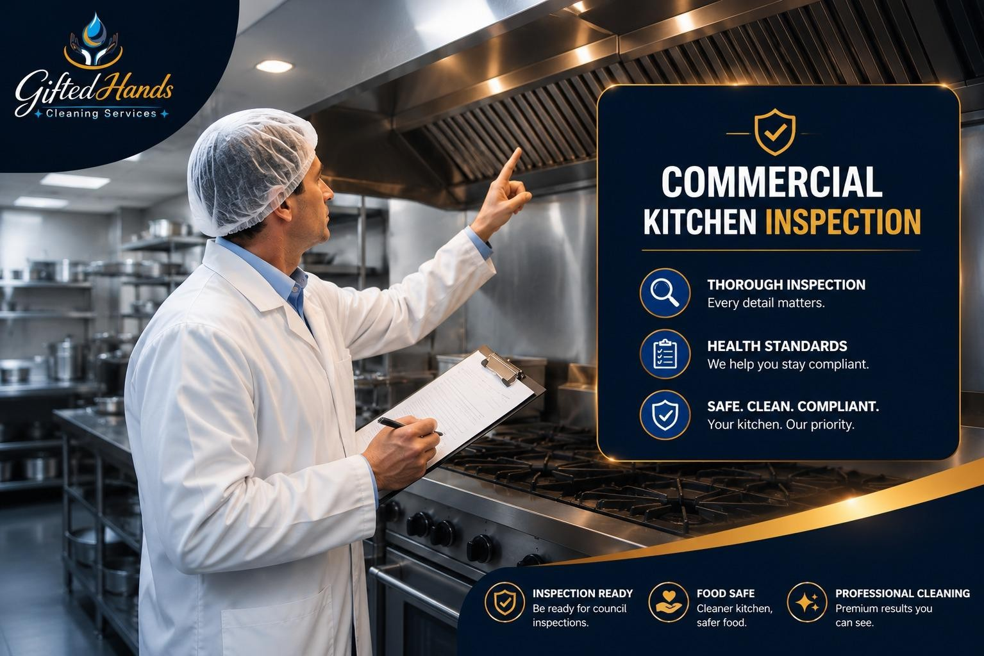
Hospitality businesses in Adelaide are often under pressure. Unannounced inspections from council health departments can generate significant stress for businesses. The local government in South Australia is responsible for enforcement of food safety regulations for Commercial Kitchen Cleaning Adelaide throughout the state. In order to protect the health of the public, your food business will be inspected from time to time by the local council.
High end restaurants, such as those located in North Adelaide, cafes found in the CBD and small family run bakeries situated in residential areas with Commercial Kitchen Cleaning Adelaide are required to comply with the SA Health Food Safety Standards at all times. It is essential that businesses are able to maintain food safety and good hygiene practices on an ongoing basis within their commercial kitchen.
Prior knowledge of what SA Health Food Safety Standards inspectors are looking for during commercial kitchen inspections will allow businesses and owners to prepare prior to an inspection. Inadequate cleaning of the kitchen can result in significant penalties for business owners and managers, therefore it is paramount that all businesses are adequately prepared for any commercial kitchen inspections.
Most Commercial Kitchen Cleaning Adelaide will be expected to deal with the inspections in some way. Although many businesses are thoroughly prepared for health inspections, most will suffer from some form of cleaning failure. Usually this is hidden from view and the biggest culprit of grease, dust and grime accumulation is often the exhaust filters and duct work.
Coving in floor areas, underneath sinks and around dish washing equipment can also be a very easy area to neglect and the build up of food residue and grease in these areas can lead to serious health issues and the risk of huge fines and possible closure of the business until it can be deemed safe for consumers to return. The ultimate risk is the potential damage to a business’s reputation. Today with the increased use of online reviews a negative health score or even closure due to serious health risks can spread like wildfire and in most cases be sure to lose a large portion of regular customers to competitors very quickly.
Need help avoiding a failure in your commercial kitchen? A general overview of what to expect from your council health inspections, the common mistakes found by health inspectors during kitchen inspections, and a daily checklist for your business to keep clean and meet the health standards of your local council in order to avoid failing a health inspection.
We will also give you an overview of the Commercial Kitchen Cleaning Adelaide solutions that are available for you and your business, and will discuss how they can be used for your daily cleaning, as well as the deep cleaning of your kitchen to the highest standards.
Why Commercial Kitchens in Adelaide Face Strict Inspection
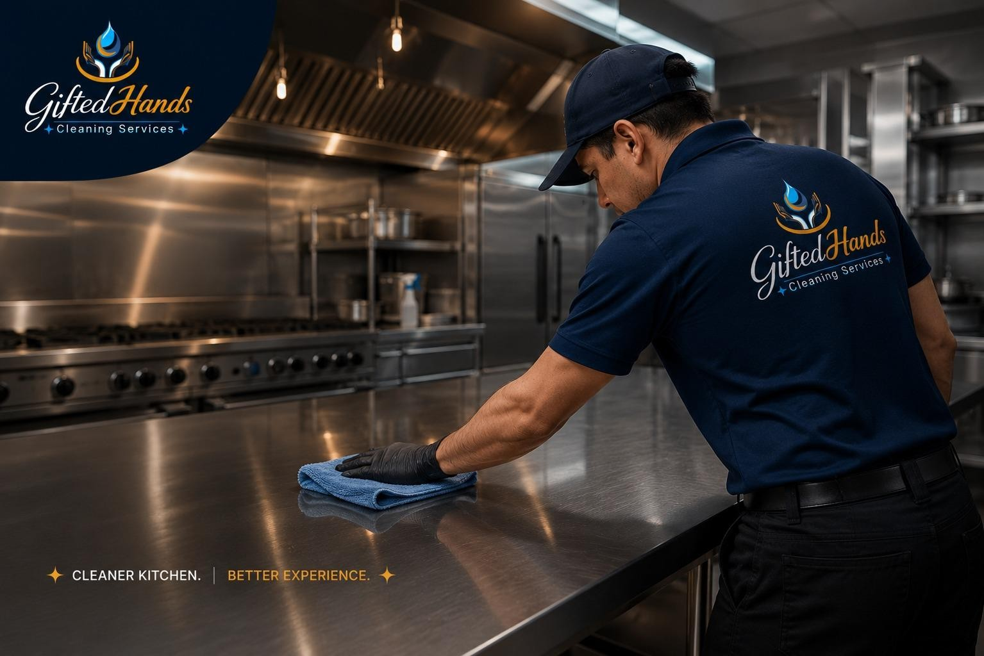
The Hospitality industry in Adelaide continues to thrive, and more so form part of the culture of the city. The local health authorities- especially local councils are never too far from sites that offer food for public consumption. The reason for council inspections into food businesses is to safeguard public health and well being.
No one wants to get ill from having food that has been contaminated by bacteria and spread through unsanitary food preparation environments. To try to avoid outbreaks of such illnesses the national food safety guidelines are enforced by FSANZ (Food Standards Australia New Zealand) and local health inspectors ensure that all food preparation sites adhere to these standards. And here it is very important to remember that these same standards apply to all food preparation sites.
This policy of inspection applies to all food preparation establishments across Australia, no matter how big or small, how high class or low. The local health inspectors and the council officials who carry out the inspections treat all food preparation sites equally.
So a small corner takeaway food shop is expected to maintain the same high standards of grease management, pest control, and cleaning and sanitizing of surfaces and equipment as a multi-story restaurant in the CBD. The health inspectors and local government officials would view a failure in food safety at any food preparation site with the same seriousness. Hence the health officials operate on a policy of zero tolerance for any failure in food safety.
All of the food preparation environments listed above are held to the same standards of cleanliness and food safety by council inspectors. In Adelaide, corner shops with very few food preparation areas and minute grease traps will be expected to manage and clean up the same amounts of grease as multi-level restaurants based in the CBD. Also, pest control and surface sanitizing will be expected to be carried out to the same standards. Understanding that health inspectors work with a policy of zero-tolerance for negligence is fundamental to establishing an effective cleaning routine to continue to trade in the hospitality industry in Adelaide.
The Most Common Reasons Commercial Kitchens Fail Inspections
Hidden dirt in a well run restaurant can sometimes go un-noticed in busy periods but before you know it that hidden dirt could have cost you a fortune in fines or even led to the temporary or permanent closure of your restaurant. It is always best to find out where others have gone wrong. Below are some of the critical issues found by health inspectors and are outlined in the City of Adelaide guidelines for food businesses.
Dirty Exhaust Filters and Canopies – It amazes me how many restaurants have dirty exhaust filters and canopies. Clogged canopy filters allow for bad smells to escape from your kitchen and create an unhealthy environment for your staff. Dirty exhaust filters are often clogged with heavy grease which is highly flammable and can cause a serious fire in your restaurant.
Carbon and Grease Build-Up on Cooking Equipment Just because you’ve wiped down the front of your deep fryer or grill doesn’t mean that the carbon and grease residue has been removed from the rest of the equipment. Inspectors look at the sides, backs and bottoms of your primary cooking equipment. The baked on carbon and grease from years of improper cleaning creates the perfect breeding ground for bacteria to develop. Not only can this create serious health risks to your customers but also attract unwanted pests to your cooking area.
Dusty Floor Edges Neglecting to clean the floor edges is another major error amongst restaurants today. In the evening, after a long day of work, after a busy lunch service during the day it’s easy to forget to wipe down the floor edges; after all, you have most likely already mopped the floor. However, it is the floor edges, particularly the coving, where so much dirt and food debris accumulates.
In addition, when stagnant water collects in the edges of floors, the perfect breeding ground for pest attraction is created. Such dirt, debris, and associated pest draw will most certainly be found running along the floor edges and thus warranting lost points.
Blocked or Foul-Smelling Drains. The floor waste drains and grease traps in your kitchen need to be cleared and flushed on a regular basis. If the floor waste drains become blocked then there will be a risk of contaminated water pooling on the floor which will create serious hygiene issues and produce objectionable odors.
UnClean Cool Rooms Your Cool Room is where you store all your food. If it is not kept in a clean manner then problems can arise. An inspector has found black mold growing from refrigerator door seals, rusty or dirty shelves and old spill marks on the floor. This can lead to cross contamination of foods, especially raw foods with cooked and ready to eat foods.
No Cleaning Schedule or Records – Documentation is Key One of the common reasons for failure in food safety is that a restaurant has not shown sufficient documentation of the cleaning that is done on a daily, weekly and monthly basis. Simply stating that the work is not good enough for inspectors, they want to see up-to-date signed log books which detail all cleaning that is undertaken.
The Hidden Grime: Areas Most Business Owners Forget to Clean
For inspectors like those from the Adelaide council, it is the areas of the kitchen that are not regularly cleaned which provide the greatest potential for failure. For most kitchens the focus for cleaning is upon the bench space, the cutting boards, and the main cooking line. While it is easy to focus upon these obviously exposed areas, it is the out of sight, out of mind regions that can be the downfall for inspectors who specifically search for the hidden grime which has had time to accumulate over weeks and months for a variety of reasons.
Behind heavy equipment such as ovens, deep fryers and refrigerators is a dusty, dirty forgotten area that houses weeks or months worth of old food scraps, grease and moisture, attracting cockroaches and rodents alike. And don’t forget the vents above eye level too! Many will clean around them but the secondary exhaust system and the air conditioning vents bring dust and grease into the kitchen and then are blown back over the chefs’ preparation of food – all very unsanitary.
Wall grout and tile splashbacks are a hidden area of grease that are usually painted over with colorful, splashy wall art. After a while the grout will have absorbed cooking oils and turned black with bacteria. Wall grout lines are another area to make sure are thoroughly cleaned during deep cleaning, the tiles may get a good clean but the grout lines get left behind.
Wall grout lines, which surround the tiles, are also another area often overlooked by Kitchen Hygiene Teams. They become porous with floating oils from cooking and become covered in a black dingy film that harbors the most deadly of bacteria, which are then spread through scrubbing down the grout lines with a mixture of baking soda and bleach.
High touch points within a Commercial Kitchen Cleaning Adelaide include Fridge door handles, Oven door handles, Cool Room door handles and any latch that requires to be pulled or pushed to open a door or container. If these are not deep cleaned on a regular basis to kill all bacteria and germs that have been spread through human contact between the handling of raw products such as meat, seafood, and poultry and ready to eat products such as Salads, Fruit, Cheese and Bread then there is a real risk of food poisoning occurring.
Many neglected areas in the kitchen are behind storage and the huge amount of dry goods stored. These are always overlooked by inspectors who will be looking for any evidence of dropped goods and signs of pest activity. Also all overhead light fittings will be inspected for a buildup of flour dust that has fallen from the air and subsequently vaporized grease that has dripped from above prep areas. It is crucial that all of these zones are cleaned and put back in order on a regular basis as part of deep cleaning in order to gain true hygiene in the kitchen and to pass Council Inspectorate audits.
The Ultimate Commercial Kitchen Deep Cleaning Checklist
Are you struggling to keep your commercial kitchen clean enough for council health inspections? It can give the appearance of being clean with a quick wipe down of surfaces; but deep cleaning a kitchen to be able to be confident that it has been properly cleaned, and to be ready for any health inspection at any time, is a far more complex job. This ultimate commercial kitchen deep cleaning checklist is divided into three parts.
Daily / Nightly Cleaning Tasks, Weekly Cleaning Tasks, and Monthly Deep Cleaning Tasks.
This is the ultimate guide to help you keep your kitchen in the highest standard of hygiene and pass any health inspection.
Daily / Nightly Cleaning Tasks. These are the night after night tasks to be performed in your commercial kitchen at the end of each shift to enable your kitchen to function correctly for the following day. Clean down and sanitize all food prep areas including all food preparation benches, cutting boards and all other exposed stainless steel surfaces.
Floor: sweep all floor areas including coving and then subject to a thorough mop down using a heavy duty degreaser.
Waste management: Empty all waste bins and recycling bins, wash and sanitize them.
External degreasing of cooking equipment: External cleaning of all ovens, fryers and grills with a suitable degreaser to remove grease from all surfaces.
Dishwashing stations: The surrounding areas to and from the sinks / dishwashers should be thoroughly cleaned and sanitized with a food-safe sanitiser. This includes the splash back and floor space surrounding the wash area.
All stored food: stored in labeled, sealed and dated containers and stored at correct temperature.
Weekly Cleaning. These tasks are to be done on specific days of the week to allow for proper cleaning and sanitizing of areas that build up grime at a slower rate than daily cleaning.
- Grout and splashbacks: Scour and sanitise grout lines and tile splashbacks found behind the main cooking line.
- Clean & Sanitize Refrigerator Door Seals: For all refrigerators and cool rooms, clean and sanitize the door seals to prevent black mold growth.
- Oven: Spray a commercial degreaser in the oven including the doors, and spray the racks as well. Allow to penetrate and then wipe or scrub off thick black carbon buildup.
- Floor Waste Drain Cleaning: Use heavy duty enzyme drain cleaners in the floor waste drains of all kitchens to dissolve grease and fat deposits to avoid blockages causing odor to escape.
Monthly Deep Cleaning Tasks The monthly deep clean is a crucial, very detailed job which will need to be done to maintain long term compliance with Council health regulations as well as maintain a kitchen that is safe from the risk of fire. The following need to be done:
- Move heavy equipment: Every 4-6 weeks pull out all large appliances (ovens, fryers, commercial fridges) and thoroughly scrub the hidden walls and floors behind them. This includes the backs of dishwashing installations and walls that are often forgotten until a pest problem arises. These are also critical for long term fire safety.
- Exhaust systems: Clean exhaust hoods, canopies and ventilation flues and remove the dangerous and flammable grease built up in the system. It is recommended that this work be carried out by a specialist.
- Clean your grease trap. While you may be required to have your grease trap pumped out periodically by a licensed sanitation worker, it should also receive a good deep cleaning between pump outs. The cleanings can involve opening up the access ports to scrub away any debris that has accumulated.
- Dry store audited– A complete clean and sanitizing of the dry store including all of the shelving and cartons storing to detect any sign of pest attack.
How Often Should a Commercial Kitchen Be Deep Cleaned?
Daily and weekly cleaning in your Commercial Kitchen Cleaning Adelaide is crucial to maintain high standards of food safety and hygiene. However, a schedule for deep cleaning will need to vary
depending on your commercial business. The frequency of deep cleaning depends heavily on the amount of food you prepare every day, and on the type of cooking you do.
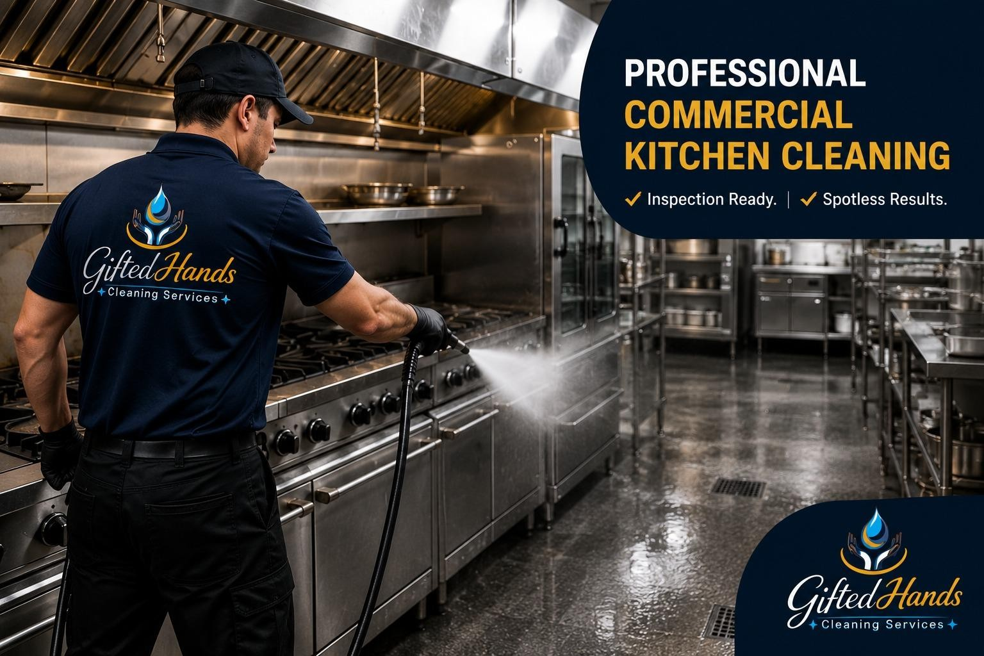
For instance, busy burger joints or fried chicken outlets with large volumes of food production will typically have large amounts of grease to remove from their exhaust canopies and greasy surfaces on a regular basis. In these instances, the heavy-duty professional cleans of their exhaust and canopy cleaning and the char-grill and deep fryer cleaning will need to occur on a regular basis to prevent the grease from becoming a fire hazard. On the other hand, smaller sandwich bars, delis, salad and light bakery outlets can generally leave larger amounts of time between these heavy duty professional cleans.
Regardless of the dynamics of your business, regular and time scheduled deep cleans are essential. Not only will aid in ensuring the successful compliance of your Adelaide Food Handling Facility with the local council however also provides protection against unexpected down-time should an unscheduled deep clean be required on account of a nasty outbreak of disease or pest. Here is some general information regarding suggested schedules for Scheduled Deep Cleans for the majority of commercial kitchen environments:
The Benefits of Professional Commercial Kitchen Cleaning
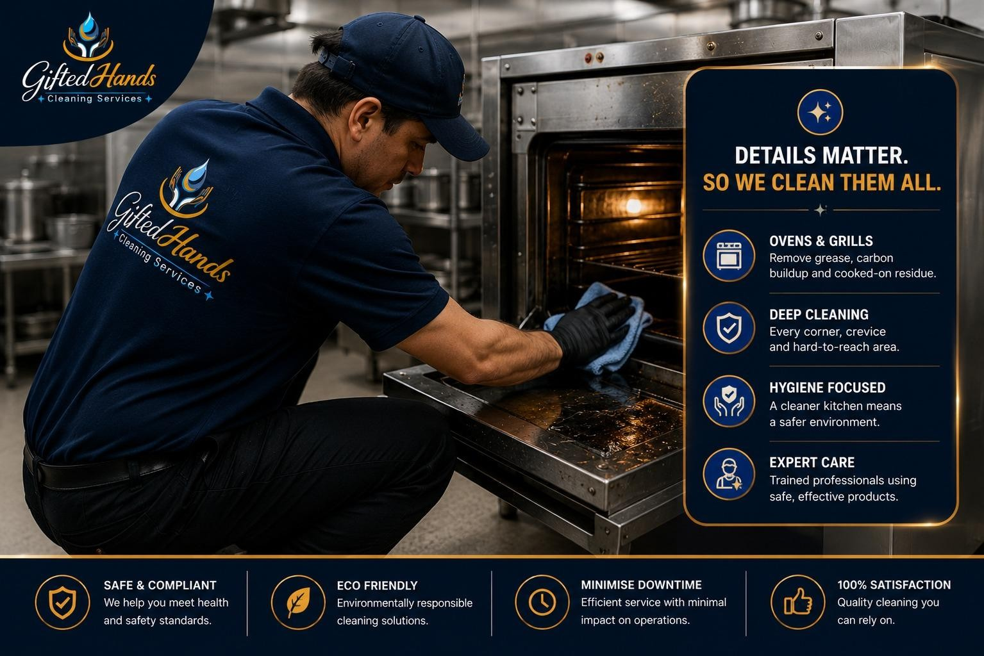
A lot of the responsibility of cleaning and sanitizing the kitchen on a day to day basis is put on the kitchen staff.. However, to expect them to carry out a deep clean from top to bottom after a long 12 hour service day is asking for the breakdown of your staff. The immediate relief for your
Chefs and kitchen hands is huge when they don’t have to clean the kitchen after service allowing them to return to work after their break to prepare food for the next days service, thus allowing them to return to work refreshed and motivated in a clean, hygienic and odor free working environment.
In addition to helping to prevent staff burnout, deep cleaning the kitchen can help protect the health of your business by extending the life of high cost cooking and refrigeration equipment. Heavily soiled carbon and grease build up on surfaces in commercial kitchens forces the equipment to work harder in order to function. This in turn can cause breakdowns, leading to repairs and even premature replacement, incurring significant cost.
The grease that accumulates in exhaust canopies and ventilation flues is also highly flammable, and if not removed regularly, poses a serious risk of fire. Professional deep cleaning of your kitchen can help to remove this grease, allowing you to have peace of mind that in the event of a fire, your property and business will be protected by your commercial insurance policy.
The biggest benefit is peace of mind. No chef or restaurant owner wants to have the fear of an unexpected visit by the Adelaide council’s Environmental Health Officer and closure of their kitchen and business due to unsanitary conditions of their kitchen and facilities.
With the Commercial Kitchen Cleaning Adelaide services handling all of the deep cleaning tasks, there is no chance of any hidden dirt, grime and odors being found by the council officers in an unannounced inspection. All staff can do is to welcome them in with open arms and with the knowledge and confidence that the kitchen is in the best possible condition to be found and is sure to pass inspection with flying colors.
Why Hospitality Businesses Choose Commercial Kitchen Cleaning Adelaide
Most of the restaurants, cafes and best bakeries in Adelaide use outside help for the deep cleaning required to keep a fully operational kitchen in a state of food safe compliance on a continuous basis throughout the year. There are a number of reasons for this. Firstly they have the heavy duty cleaning agents required to deep clean their kitchens on an ongoing basis. Many retail cleaners do not have access to the same level of degreasers that will cut through the toughest grease and grime in commercial kitchens.
Our cleaning solutions for commercial kitchens are made with the heavy duty cleaning agents required to remove deep seated carbonized grease and oils from ovens, fryers and exhaust canopies. Most retail degreasers on the market are not able to cut through such tough grime. We use a range of commercial strength cleaning agents, many of which are Eco-friendly, safe for use and do not leave any toxic residues behind. Our deep cleaning of your commercial kitchen will ensure that it is left in a safe and clean environment to operate in for food preparation.
This expertise means that they will clean your commercial kitchen just as an Environmental Health Officer would. The major areas they will focus on are the high-risk places that can be easily missed. When you have a large amount of staff and are busy with getting meals ready to be served, the darkest recesses behind the deep fryer or the dust that accumulates on the overhead lights are easy to miss. This is especially important when you are moving to new commercial premises and require Commercial Kitchen Cleaning Adelaide to return the kitchen to the landlord in the best possible light and to get your full bond returned.
Another advantage of hiring professional Commercial Kitchen Cleaning Adelaide is the documentation that the team can provide after completion of the clean. A thorough deep clean is a huge undertaking and after all that hard work it would be a shame for a business to have their great work disregarded because they can’t provide any evidence to back up their claims of cleanliness.
That is why every deep clean we carry out for our commercial clients is fully documented and includes a comprehensive cleaning log as well as a certificate of compliance. This not only proves to council officials that your business is actively working to maintain the highest possible standards of cleanliness, but it also serves as irrefutable evidence that your business is fully compliant with all relevant food hygiene laws and can therefore ‘breeze’ through health inspections. To find out more about our expert deep cleaning services for commercial kitchens and other properties, About Us.
Conclusion
Commercial Kitchen Cleaning in Adelaide. Having a clean commercial kitchen in Adelaide is not just about food and the service that you provide your customers, it is also about their safety and health as well as your staff and your reputation. In order to avoid any stress or hassle from health inspections from Environmental Health Officers from your local council, it is crucial to take a proactive stance in the cleaning and sanitizing of your kitchen on a regular basis.
At Gifted Hands Cleaning Services we specialize in deep cleaning for commercial kitchens in the hospitality industry in Adelaide. Our cleaning techniques are designed to ensure that your kitchen is not only clean but also to be in compliance with health and safety standards set by your local council at all times.
Don’t take a chance with your health inspection. Gifted Hands Cleaning Services offers local hospitality businesses the most thorough deep cleaning service to get you ready for your health inspection. We ensure that every area and piece of equipment in your commercial kitchen is cleaned to the highest standard. Our methodical approach to your deep clean gives you confidence that you will pass your council health inspection with flying colors. Contact us today through our Contact Us page for a FREE quote and let us give you and your business some peace of mind with a truly clean commercial kitchen.
FAQ
- How often should your commercial kitchen be professionally cleaned? TThe amount of cleaning required in your kitchen will depend on the level of use the kitchen receives and the amount of equipment in the kitchen. A heavy-use kitchen with deep fryers may require a quarterly deep clean of the exhaust canopy and equipment, however, a lighter food prep kitchen like a cafe would only need a bi-annual deep clean, and then daily surface cleaning and sanitizing between.
- What do council inspectors look for in an Adelaide kitchen?Council health inspectors from Adelaide council areas conduct regular health and hygiene inspections of food businesses.. During an inspection for Adelaide commercial kitchens they focus on searching for any sign of hidden grease, any sign of pest activity and will check that all of your foods are being stored at the correct temperatures. They check the floor coving is clean and also that all of your kitchen drains are unblocked. They also look at all food preparation areas for adequate cleaning and sanitizing and will ask to see any documented evidence of cleaning including the cleaning logs.
- Grease build-up can cause failed health inspection? Grease build-up, especially excessive build-up, is one of the most common reasons for failed health inspections. Grease build-up hidden behind equipment, in exhaust canopies and in fryers pose extreme fire risks and attract pests. Hidden grease build-up also harbors bacteria that can cause serious health problems and lead to the spread of serious diseases.
- Do professional cleaners clean commercial exhaust systems? Yes. We specialize in cleaning the complex exhaust systems that service commercial kitchens. We have the necessary equipment and training to safely remove flammable carbon and grease from exhaust canopies, flues and fans. Removing grease from exhaust systems is crucial for commercial kitchens in order to ensure that the system operates safely and effectively in order to pass council health and safety regulations for commercial kitchen cleaning.
How much does commercial kitchen cleaning cost?Adelaide commercial kitchen cleaning costs vary depending on the size of your kitchen, how dirty your kitchen is and the services you require for cleaning your kitchen.For a general preventative deep clean of your kitchen the price starts at a few hundred dollars. Grease extraction and cleaning of exhaust systems can cost more depending on the amount of grease and the complexity of the exhaust system. We would be happy to provide you with a competitive quote for your commercial kitchen.